From Secret Files to Secret Sauce: The Intelligence Officer Who Cooked Her Way Into America's Heart
The Unlikely Spy
In 1942, Julia McWilliams stood six feet two inches tall, spoke with the confidence of someone born to privilege, and had absolutely no idea what to do with her life. At 30, she was working a mundane job at a department store in Beverly Hills when Pearl Harbor changed everything. Like millions of Americans, she wanted to serve her country. Unlike most, she ended up filing top-secret documents in a cramped office in Washington, D.C., as part of the Office of Strategic Services — the precursor to the CIA.
This wasn't the glamorous spy work of Hollywood films. Julia spent her days organizing classified intelligence reports, managing communication networks, and developing filing systems for sensitive information. It was meticulous, often tedious work that required absolute precision and attention to detail. She had no way of knowing that these seemingly mundane skills would later transform how America cooked.
Lessons in Precision
The intelligence world taught Julia something that would prove invaluable in her later career: the importance of getting every detail exactly right. In espionage, a misfiled document could compromise an entire operation. A poorly organized communication system could cost lives. This environment of exacting standards shaped how Julia approached everything.
When she was transferred to Asia — first to India, then to China — her work became even more complex. She helped coordinate intelligence operations across multiple countries, managed logistics for covert missions, and learned to navigate bureaucracies that made American red tape look simple. The cultural immersion was total and transformative.
The Accidental Education
Living in Asia during wartime gave Julia something no culinary school could provide: complete cultural immersion combined with the analytical mindset of an intelligence officer. She approached local cuisines not as a tourist sampling exotic foods, but as someone trained to observe, document, and understand complex systems.
In Ceylon (now Sri Lanka), she tasted her first authentic curry. In China, she watched street vendors prepare dishes with techniques passed down through generations. But unlike other Americans abroad, Julia's intelligence training had taught her to pay attention to processes, to understand how seemingly small variations could produce dramatically different results.
She began keeping detailed notes about what she ate, how it was prepared, and why certain combinations worked. This wasn't yet about becoming a chef — it was simply the habit of a trained observer applying her professional skills to personal interests.
The Long Road Home
When the war ended, Julia married fellow intelligence officer Paul Child, and they settled into what seemed like a conventional diplomatic life. Paul's career took them to France, where Julia expected to play the role of a supportive diplomatic wife. Instead, she found herself in a country where food was treated as both art and science.
Her first meal in France — sole meunière at La Couronne in Rouen — is now culinary legend. But what made that moment transformative wasn't just the quality of the food. It was how her intelligence training had prepared her to recognize that she was experiencing something systematically different from American cooking.
Julia approached French cuisine the way she had approached classified documents: with methodical attention to detail, a determination to understand underlying principles, and the patience to master complex systems. She enrolled at Le Cordon Bleu not as a dilettante, but with the focused intensity of someone accustomed to mastering difficult subjects under pressure.
 Photo: Le Cordon Bleu, via i.pinimg.com
Building the Revolution
When Julia began working on "Mastering the Art of French Cooking" with Simone Beck and Louisette Bertholle, she brought skills that had nothing to do with cooking and everything to do with her intelligence background. She approached recipe development like intelligence analysis: testing every variable, documenting every outcome, and refusing to accept "that's just how it's done" as an adequate explanation.
The book took nearly ten years to complete because Julia insisted on testing every recipe multiple times, adapting French techniques for American kitchens, and explaining not just what to do but why it worked. This obsessive attention to detail — the same trait that had made her valuable in intelligence work — revolutionized American cookbook writing.
The Television Natural
When Julia demonstrated cooking techniques on television, her intelligence training showed in unexpected ways. She was unflappable under pressure, having learned to stay calm when operations went wrong. She was comfortable with authority, having spent years briefing senior officials. Most importantly, she understood that effective communication meant breaking complex information into manageable pieces.
Her famous mishap on "The French Chef" — when she flipped a potato pancake that landed half on the floor — became legendary not because of the mistake, but because of her unruffled response. "You can always pick it up," she said, continuing the demonstration. This was someone who had learned to adapt when plans went wrong, a skill honed in environments where flexibility could mean the difference between mission success and failure.
The Accidental Revolutionary
Julia Child didn't set out to revolutionize American cooking. She stumbled into it through a series of detours that seemed to lead nowhere: intelligence work that felt mundane, overseas assignments that interrupted any conventional career path, and a late-in-life discovery of her true passion.
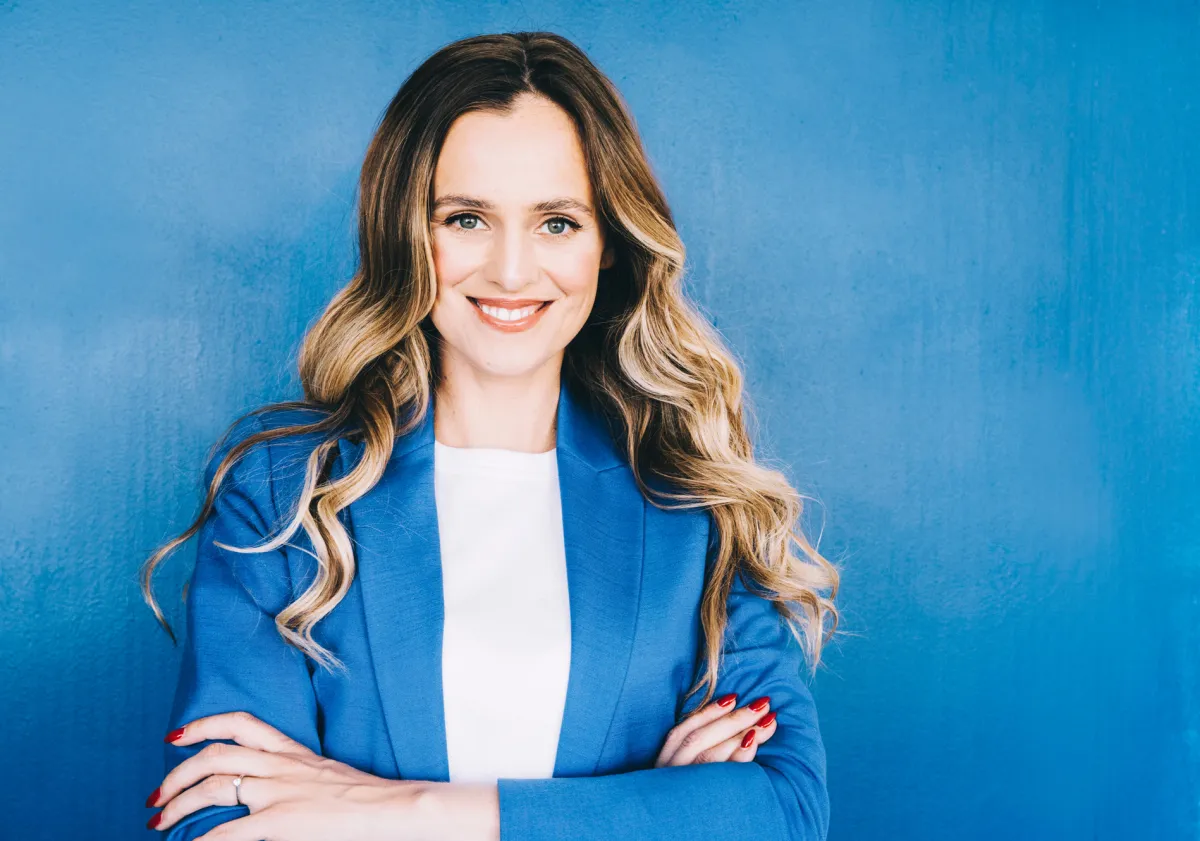 Photo: Julia Child, via static.wixstatic.com
But those detours built exactly the person America needed. The intelligence officer's precision became the cookbook author's reliability. The cultural immersion of overseas assignments became the television teacher's authenticity. The bureaucratic patience of government work became the persistence needed to change how an entire nation approached food.
By the time Julia Child became a household name, she was in her 50s — an age when most people's careers are winding down. But her unlikely path through the intelligence world had given her something more valuable than early success: the skills, perspective, and determination to create something entirely new.
Her story reminds us that the most transformative careers often begin with what feels like the wrong turn. Sometimes the detour isn't delaying your real life — it's building the foundation for the life you never knew you wanted.