The Half-Deaf Carnival Barker Who Talked America Into Buying Everything
Before there was a Madison Avenue. Before there were Super Bowl commercials, focus groups, or brand identity consultants. Before the entire machinery of American consumer culture existed — someone had to invent it. And the person who did was a partially deaf kid from small-town Illinois who'd spent his formative years shouting over the noise of a carnival midway, trying to get strangers to stop walking and start spending.
 Photo: Madison Avenue, via cdn.credaily.com
His name was Earnest Elmo Calkins, and almost nobody remembers him today. Which is strange, because you've been living inside his ideas your entire life.
The Noise That Shaped Him
Calkins was born in Geneseo, Illinois in 1868. He was a curious, bookish child with an aptitude for language and a talent for noticing things that other people walked past. Then, around adolescence, a bout of measles — the kind of illness that was routine and devastating in equal measure in that era — robbed him of most of his hearing.
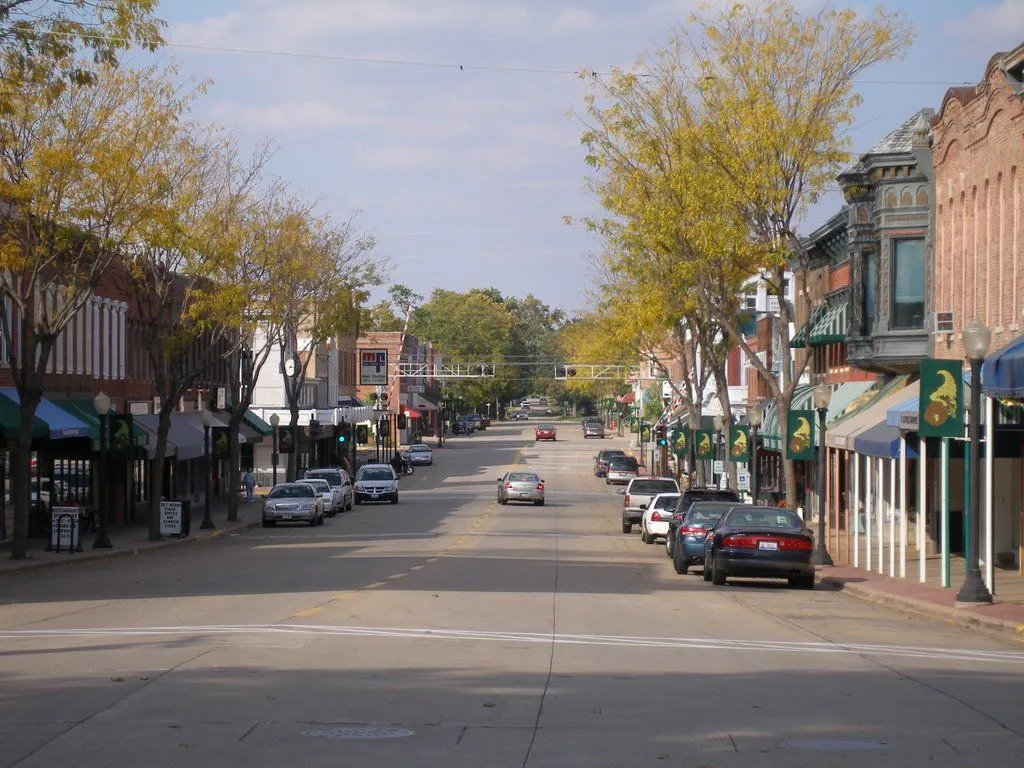 Photo: Geneseo, Illinois, via i.pinimg.com
The timing was brutal. He was at the age when most young men were figuring out how to navigate a social world built almost entirely on conversation, negotiation, and the subtle music of spoken language. Calkins had to figure out how to work around all of that.
What he discovered, in the years that followed, was that he had a gift for reading rooms. For understanding what people wanted before they said it. For translating desire into image and image into action. And nowhere was that gift more useful than at the carnival.
Working the midway as a teenager, Calkins learned something that no business school had yet thought to teach: people don't buy things. They buy feelings. They buy the idea of who they might become if they hand over their money. The best carnival barker isn't selling a ride or a game or a sideshow attraction. He's selling a story. And the crowd either believes it or it doesn't.
Calkins believed it. And he started figuring out how to make other people believe it, too.
The Industry That Didn't Want Him
When Calkins eventually made his way to New York and tried to break into the nascent world of commercial advertising in the 1890s, the reception was icy. The industry at the time was dominated by men who saw themselves as sophisticated intermediaries between manufacturers and newspaper column inches. It was a transactional business — you bought space, you filled it with words, people read it. Done.
Calkins thought that was a catastrophically limited way to think about it.
His hearing loss, which made ordinary office life genuinely difficult, meant he was passed over constantly. Employers didn't know what to do with a man who couldn't always follow a meeting or catch a client's offhand comment. The professional world of the late 19th century had very little patience for difference of any kind, and Calkins experienced that rejection repeatedly.
But rejection, as it turns out, is an excellent teacher. Every door that closed pushed him further toward the idea that he'd have to build something new rather than squeeze into something existing.
The Principles Nobody Had Written Down Yet
In 1902, Calkins co-founded Calkins and Holden, an advertising agency that would quietly rewrite the rules of the entire industry. What he brought to it wasn't just talent — it was a completely different philosophy about what advertising was actually for.
He argued, at a time when this was genuinely radical, that visual design and written copy were not separate concerns. That the way an advertisement looked was inseparable from what it said. That a brand had a personality — a consistent emotional identity that consumers should be able to recognize across every touchpoint, from a magazine page to a storefront window.
These ideas sound obvious now. In 1902, they were borderline revolutionary.
Calkins developed what he called "consumer engineering" — the deliberate shaping of desire through aesthetic experience. He believed that beauty wasn't a luxury in commercial communication; it was the mechanism. If you made something beautiful, people didn't just notice it. They wanted it. And wanting, in Calkins's framework, was always the first step toward buying.
He applied these principles to real campaigns for real brands and watched them work. The results were hard to argue with.
What the Midway Already Knew
Look closely at Calkins's foundational ideas and you can trace every one of them back to the carnival. The barker's art is, at its core, the art of creating desire in a stranger in under sixty seconds. You have one shot. The crowd is moving. The noise is constant. You have to make them stop — not with information, but with feeling.
Calkins had spent years doing exactly that under the least forgiving conditions imaginable. He'd learned to read body language because he couldn't always hear words. He'd learned to use spectacle because subtlety gets lost in crowd noise. He'd learned that the story you tell about a thing matters infinitely more than the thing itself.
Madison Avenue, when it eventually codified itself into the gleaming industry we recognize today, was essentially reverse-engineering lessons that Calkins had already learned in sawdust and shouting.
The Man the History Books Skipped
Calkins wrote prolifically — essays, books, memoirs — and his influence rippled through the advertising world for decades. He received honors, won awards, and was recognized by his peers as a foundational figure. Then, as industries tend to do, the business moved on and forgot to carry his name with it.
Today, the principles he pioneered are so embedded in how American commerce communicates that they've become invisible — the water that the entire industry swims in. Every time a brand agonizes over its visual identity, every time a copywriter argues that the image and the headline have to work together, every time a campaign is built around an emotional truth rather than a product specification, Calkins is in the room. He just doesn't get introduced.
That's the particular fate of the true pioneer: to build something so enduring that it stops looking like a creation and starts looking like a natural law.
For a half-deaf kid from Illinois who learned his craft shouting over carnival noise, there are worse legacies than that.