Blueprint from the Backstreets: The Sanitation Worker Who Redefined American Architecture
The View from the Truck
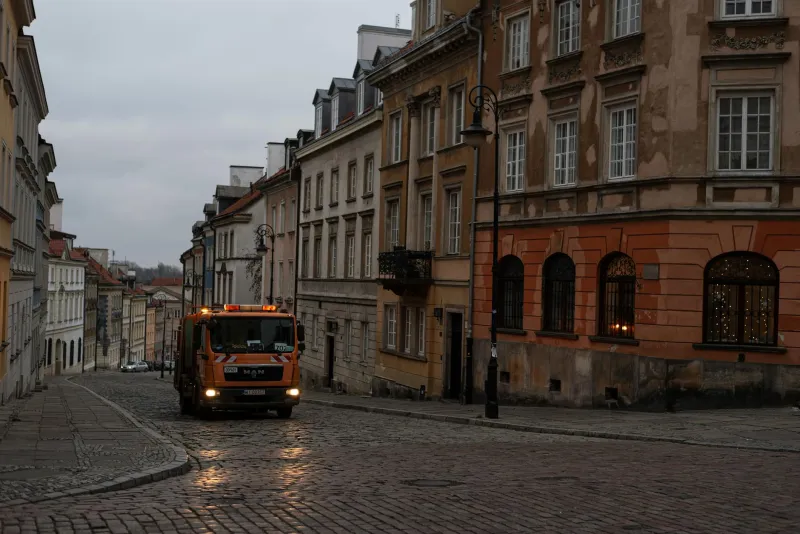
Every morning at 4:30 AM, Marcus Rivera climbed into the cab of a garbage truck and began his education in urban design. For seven years, he navigated Chicago's maze of alleyways, studying how buildings met the street, how light fell between structures, and how people actually moved through their neighborhoods. What started as a job to pay the bills became an obsession with the bones of the city itself.
Rivera never set foot in an architecture school. His classroom was the backstreets of America, and his curriculum was written in brick, steel, and the daily rhythms of urban life. While formally trained architects studied theory in lecture halls, Rivera was learning something different entirely — how cities actually worked from the ground up.
Seeing What Others Missed
The breakthrough came during a routine pickup in Lincoln Park. Rivera noticed how a seemingly simple apartment building managed to feel both private and connected to the street. The architect had angled the entrance just slightly, creating a pocket of space that invited residents to linger without blocking pedestrian flow. It was a small detail that most people would never notice, but Rivera saw it as pure genius.
"I started carrying a notebook," Rivera later recalled. "Every building that made me stop and look, I'd sketch it out during lunch breaks. I was trying to figure out what made some places feel alive and others feel dead."
His notebooks filled with observations that architectural schools weren't teaching. How garbage placement affected a building's relationship to the street. Which design choices made maintenance easier or harder. How the wealthy neighborhoods handled privacy differently than working-class areas, and what both approaches could learn from each other.
From Margins to Mainstream
Rivera's transition from sanitation to architecture began with a chance encounter. While collecting trash from a small design firm, he noticed the architects struggling with a community center project. The building looked impressive on paper but felt disconnected from the neighborhood it was meant to serve.
During his break, Rivera approached the lead architect with a simple observation: "You're designing for how you think people should move, not how they actually do." He pulled out his notebook and showed sketches of foot traffic patterns he'd observed over months of pickups in that exact area.
The architect, Sarah Chen, was initially skeptical. But Rivera's insights were based on daily observation of real behavior, not theoretical models. His suggestions — moving the entrance fifteen feet, adding a small plaza where people naturally gathered, designing the loading dock to double as community seating — transformed the project.
Building a New Kind of Practice
Chen became Rivera's first mentor, helping him navigate the licensing requirements while learning from his street-level perspective. Rivera spent evenings studying building codes and engineering principles, but his real expertise remained rooted in observation.
His first independent project was a housing development in his old garbage route territory. Instead of imposing a design from above, Rivera spent months walking the neighborhood, talking to residents, and mapping how people actually used space. The resulting buildings felt organic, like they had grown from the community rather than being dropped into it.
"Traditional architecture education teaches you to think about buildings as objects," Rivera explained in a later interview. "But buildings aren't objects — they're relationships. Relationships between people, between indoor and outdoor space, between public and private, between what a place is and what it could be."
The Garbage Route Philosophy
Rivera's approach, which colleagues dubbed "garbage route architecture," emphasized three core principles that emerged from his years on the truck:
Infrastructure First: Beautiful buildings that ignored practical needs — trash collection, delivery access, maintenance requirements — were fundamentally flawed. Rivera designed with the full lifecycle of a building in mind.
Community Observation: Instead of relying on surveys or focus groups, Rivera advocated for extended observation of how people naturally moved through and used space. His teams would spend weeks in neighborhoods before drawing a single line.
Margin Perspectives: The best insights often came from people who weren't traditionally consulted in design processes — maintenance workers, delivery drivers, elderly residents, teenagers. Rivera made these voices central to his planning process.
Recognition and Revolution
By 2019, Rivera's firm had completed over forty projects across the Midwest, each one rooted in his unconventional methodology. His design for the Detroit Community Learning Center won the American Institute of Architects' Social Impact Award, praised for its seamless integration of educational, recreational, and commercial space.
 Photo: Detroit Community Learning Center, via images-na.ssl-images-amazon.com
The judges noted something remarkable: the building felt like it had always been part of the neighborhood, despite being completely new. Rivera's secret was simple — he had learned to see cities the way cities actually worked, not the way architects thought they should work.
Legacy from the Margins
Today, Rivera teaches at the University of Illinois, where his "Urban Immersion" course requires architecture students to spend a semester working alongside city maintenance crews. His textbook, "Design from the Ground Up," is required reading in programs nationwide.
His story challenges the assumption that expertise only comes from formal education. Sometimes the most profound insights emerge from the margins — from the people who see cities from angles that traditional training never considers.
Rivera's garbage truck may be parked permanently now, but his perspective continues to reshape how America builds its future. His legacy proves that the best education sometimes happens not in classrooms, but in the alleys and backstreets where real life unfolds every day.