Three O'Clock in the Morning: The Unsung Hour That Quietly Built Modern America
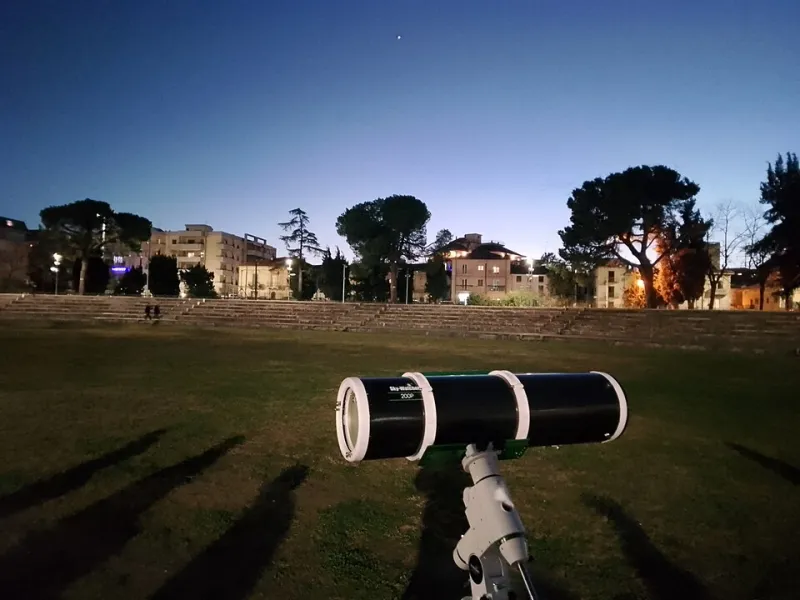
Photo: Cats' photos, CC0, via Wikimedia Commons
There's a particular kind of silence that settles over America between midnight and dawn. The highways empty out. The offices go dark. The country, for all its noise and ambition, powers down.
But not everyone goes to bed.
And here's the thing Maverick Chronicle keeps coming back to: some of the most consequential work in American history was done by the people clocking in precisely when everyone else clocked out. Not in spite of the darkness — often because of it.
The Astronomer Who Stayed at the Eyepiece
In 1967, a graduate student named Jocelyn Bell was working grueling overnight shifts at a radio telescope in the English countryside, poring over miles of chart paper by hand. The routine was brutal. The work was unglamorous. And at 3 a.m. one August night, she noticed something odd — a strange, rhythmic signal no one had predicted and no one else had bothered to look for.
It turned out to be a pulsar, the collapsed remains of a dead star spinning like a lighthouse beam. The discovery rewrote physics. Bell was one of the sleep-deprived night workers; the senior scientists on the project had long since gone home.
The lesson isn't that night shift workers get lucky. It's that the world looks different at 3 a.m. — and someone has to be there to see it.
When the Bakery Ran Out of Everything
Then there's the kitchen version of the same story. In the 1930s, the maker of Twinkies, James Dewar, was staring down a real problem: his company's ovens sat idle most of the year because its main product — little shortcakes filled with strawberries — was seasonal. Strawberry season lasted weeks. The bakery, the workers, the whole operation had nothing to do the rest of the time.
Rather than shut the line down, Dewar started filling the cakes with a cream substitute and selling them year-round. A production problem, solved in the middle of the night by a man trying to keep his crew employed, became one of the most recognizable snack foods in American history. The Twinkie wasn't invented by a marketing genius. It was invented by logistics — by someone awake when the ovens were.
Plenty of other household names followed the same path. Chocolate chip cookies came from a baker improvising with what she had on hand after closing time. Frozen orange juice concentrate emerged from wartime research into keeping food edible across long distances and long nights. The pattern repeats: when the front-of-house closes, the back-of-house improvises.
The DJ Talking to an Empty Room
And then there's radio — the loneliest stage in America. Overnight disc jockeys in the 1950s and '60s were the cheapest talent their stations had: young, unproven, and assigned the hours nobody wanted. Which is exactly why the format changed underneath them.
With no producers watching and no ratings pressure until sunrise, those DJs loosened up. They told stories between records. They played the B-sides. They invented the intimate, late-night voice — half friend, half philosopher — that radio still leans on today. A whole generation of broadcasters, from small-town stations to the birth of modern talk formats, learned their craft talking to truckers and insomniacs while the program directors slept.
The audience was small. The influence was enormous.
Why the Quiet Hours Matter
There's a thread running through all of these stories, and it isn't just scheduling. It's freedom.
During the day, work happens under observation — meetings, supervision, expectations. At night, the observer is gone. The night worker has room to notice the thing that doesn't fit, to try the thing that hasn't been tried, to sit with a problem long enough for it to crack open. Bell Burnell found a pulsar because she was the one still reading the charts. Dewar saved his bakery because he was the one still thinking about idle ovens.
We tend to imagine breakthroughs happening in boardrooms and laboratories under bright lights. More often, they happen in the margins — the hours the spotlight never reaches.
So the next time you're awake at 3 a.m., take a little comfort in the company you're keeping. The astronomer is still at the eyepiece. The baker is still at the oven. Somebody, somewhere, is about to notice the thing everyone else slept through.