3 A.M. Pioneers: How the Nurses Nobody Watched Changed the Way America Heals
The Hours Between Midnight and Morning
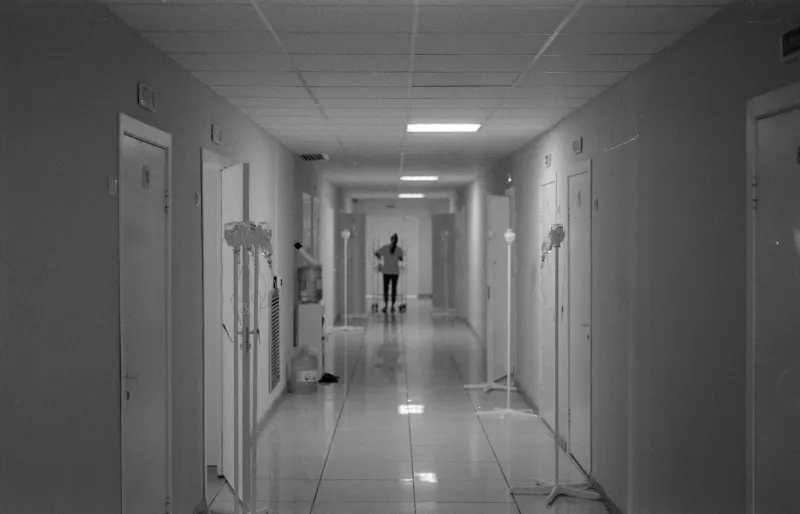
In most American hospitals through the mid-twentieth century, the night shift was where you put the staff you didn't quite know what to do with. Junior nurses. Floaters. People still proving themselves. The senior physicians were home. The administrators were asleep. The paperwork would wait until morning.
What nobody fully anticipated was that those quiet hours — stripped of hierarchy, short on resources, and long on responsibility — would become one of the most productive laboratories for medical innovation in American history.
The nurses working 11 p.m. to 7 a.m. weren't supposed to be inventing anything. They were supposed to be monitoring, maintaining, and making it to sunrise without incident. Instead, they built the frameworks that would eventually govern patient safety from coast to coast.
A Problem That Couldn't Wait Until Morning
The fundamental challenge of overnight hospital care in the 1940s and 1950s was this: things went wrong at 3 a.m. just as often as they did at 3 p.m., but the infrastructure for handling them was a fraction of the size. Fewer staff, no specialist backup, limited equipment access, and a communication chain that essentially ended when the day shift clocked out.
Nurses working those hours developed what might generously be called workarounds and what might more accurately be called a parallel system of care. They created informal checklists for monitoring patients whose conditions were unstable — not because anyone asked them to, but because the alternative was losing someone while waiting for a physician to return a call. They established quiet protocols for escalating concerns among themselves when the formal chain of command was unavailable. They documented patterns in patient deterioration that the day shift, moving faster and across more patients, rarely had time to notice.
Dr. Peter Pronovost, whose later research on hospital safety would earn international recognition, has pointed to exactly this kind of informal frontline observation as the origin point for many of the checklist-based safety protocols that became standard in American hospitals from the 1990s onward. The people doing the observing, in the decades before that research, were almost exclusively night shift nurses.
The Whisper Network That Saved Lives
Because night shift nurses operated largely without formal authority, the knowledge they developed spread the way knowledge spreads among people who aren't supposed to have it: quietly, laterally, and with extraordinary efficiency.
A nurse at a Chicago hospital who'd developed a reliable method for identifying early sepsis indicators would share it with a colleague moving to a hospital in Indianapolis. That colleague would refine it based on what she saw in her new unit and pass it along to the nurses she trained. None of this appeared in medical journals. None of it was presented at conferences. It moved through a network of women who trusted each other because they'd all been in the same position at 4 a.m. with a deteriorating patient and no physician available.
Historians of nursing, including Patricia D'Antonio at the University of Pennsylvania, have documented how this informal knowledge transfer shaped clinical practice in ways that institutional medicine was slow to recognize or acknowledge. The day shift followed protocols. The night shift, often enough, had written them.
The Hierarchy That Kept Credit Out of Reach
Understanding why these contributions went unrecognized requires understanding the medical hierarchy of mid-century America. Nursing was a female-dominated profession operating within institutions where clinical authority was almost exclusively male. The expectation — spoken and unspoken — was that nurses executed physician decisions. The idea that nurses might originate clinical innovations was structurally inconvenient for an industry built on that division.
When overnight protocols proved effective enough to be formalized, they tended to be formalized by administrators or physicians who encountered them as finished products, stripped of their origins. A checklist that had been developed and refined over years by night shift nurses at a St. Louis hospital might become official policy attributed simply to "nursing staff" — or, more often, to the department head who signed off on it.
This wasn't always deliberate erasure. Sometimes it was simply the way institutions processed information: the idea mattered; the person who'd had it first, less so. But the cumulative effect was a body of innovation that entered the medical mainstream without the names of its inventors attached.
What the Research Eventually Confirmed
The formal patient safety movement that emerged in American medicine following the Institute of Medicine's landmark 1999 report — which estimated that medical errors caused up to 98,000 deaths annually in U.S. hospitals — drew heavily on exactly the kinds of practices that night shift nurses had been developing informally for decades.
Rapid Response Teams, now standard in hospitals across the country, are a formalized version of the escalation protocols that overnight nurses had been running on improvised frameworks since the 1950s. Early Warning Scoring systems, which flag deteriorating patients before crisis hits, reflect the pattern recognition that night shift nurses developed out of necessity when no specialist was available to consult.
The researchers who built those systems were rigorous and their contributions were real. But the raw material — the observation, the pattern recognition, the practical knowledge of what actually happened to patients in the hours nobody was watching — came from women who punched out at 7 a.m. and drove home in the early morning light, unaware that what they'd figured out the night before would eventually become the standard of care.
The Shift That Never Ended
Today's hospitals are better monitored, better staffed overnight, and more attentive to the knowledge that frontline workers carry. Electronic health records create trails. Safety reporting systems invite input from every level of staff. The isolation that defined the overnight ward of 1955 is genuinely different from what night shift nurses experience today.
But the underlying dynamic — that the people closest to the patient, at the hours when institutional attention is lowest, see things nobody else sees — hasn't changed. And the women who worked those shifts in the decades before anyone was formally paying attention built something that outlasted every administrator who overlooked them.
They didn't do it to be recognized. They did it because the patient in bed four needed them to figure it out before morning.
That turned out to be enough.