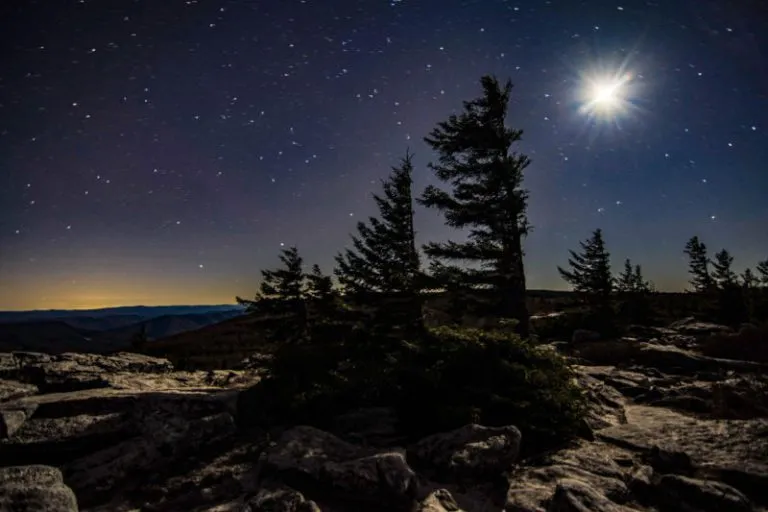
Dear Houston, Love Nobody: The Forgotten Letter Writers Who Helped Launch America to the Moon
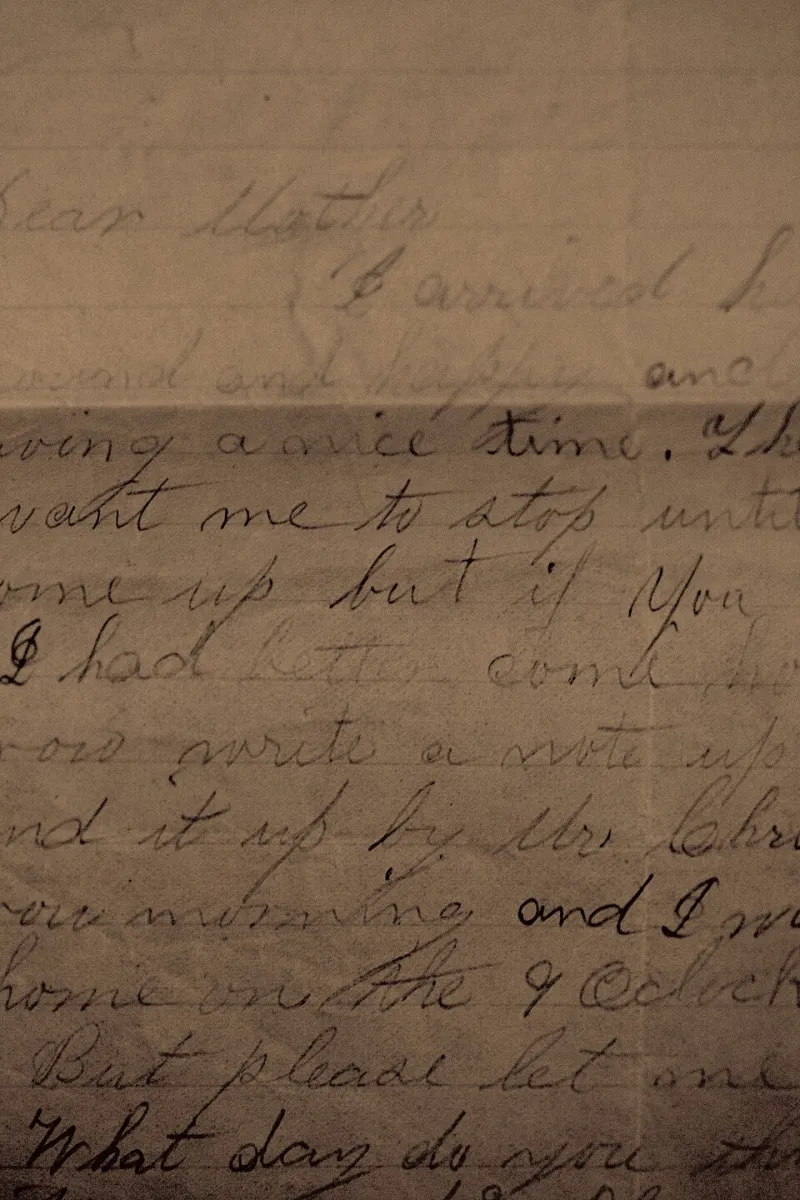
Photo: Pink Sherbet Photography from USA, CC BY 2.0, via Wikimedia Commons
The history of the American space program is usually told as a story about institutions — about NASA and its engineers, about Cold War urgency and federal budgets, about brilliant men in short-sleeved shirts hunched over slide rules in Houston and Huntsville. It's a good story. It's also incomplete.
Because running alongside the official history, largely invisible to it, was another story: a loose, rambling, decades-long conversation conducted through the United States mail by people who had no business talking about rocket science and couldn't stop themselves anyway.
The Network Nobody Built on Purpose
It started, as most genuinely interesting things do, without anyone intending it to start at all.
In the late 1930s and through the 1940s, a scattering of amateur rocket enthusiasts across the American interior — hobbyists, dreamers, and the occasional small-town science teacher — had begun corresponding with one another through the letters columns of popular science magazines. They were responding to articles, arguing about propulsion theories they'd read about, sharing results from backyard experiments that were, in several documented cases, genuinely dangerous.
What they were not doing was anything that looked, from the outside, like it mattered.
But the correspondence deepened. Addresses were exchanged. Letters got longer and more technical. A retired schoolteacher in Pratt, Kansas named Dorothy Felch began keeping a carbon copy of every letter she sent and received, eventually accumulating a file of several hundred pages of technical correspondence that she organized with the methodical care of a woman who had spent thirty years teaching other people's children to think clearly.
Dorothy had no training in aerospace engineering. She had a background in mathematics, a subscription to every popular science publication she could afford, and a conviction — stated plainly in a 1941 letter to a correspondent in rural Ohio — that the reason nobody had figured out efficient upper-atmosphere propulsion yet was that everyone working on the problem was thinking about it from the same direction.
The Schoolteacher's Insight
Dorothy's particular obsession was with what she called the "weight penalty problem" — the challenge of carrying enough fuel to escape Earth's gravity without the weight of that fuel making escape impossible. It was not a new problem. Rocket engineers had been wrestling with it for years. But Dorothy approached it from an angle that professional engineers, trained in the conventions of the field, had largely overlooked.
Her insight, developed across dozens of letters and refined through arguments with correspondents who pushed back on her math, was essentially a staging concept — the idea of shedding fuel weight in increments rather than carrying the full load through the entire flight. She wasn't the only person to have this idea. But her letters, circulating through the informal network, helped it become a recurring topic of discussion among a community of thinkers who were, crucially, unconstrained by institutional assumptions about how the problem should be solved.
Whether Dorothy's letters directly influenced any official design is difficult to prove. What's documented is that several of her correspondents eventually found their way into formal roles — as contractors, consultants, and technical advisors — during the early years of the space program, and that they brought their correspondence habits with them.
The Farmer Who Understood Combustion
Harold Birch grew up working his family's farm outside of Terre Haute, Indiana, and spent twenty years managing the kind of controlled burns that were standard agricultural practice in the Midwest before it was understood how damaging they were. He knew combustion the way Elias Dodd knew toxins — from the ground up, through years of practical observation, in conditions that rewarded accuracy and punished carelessness.
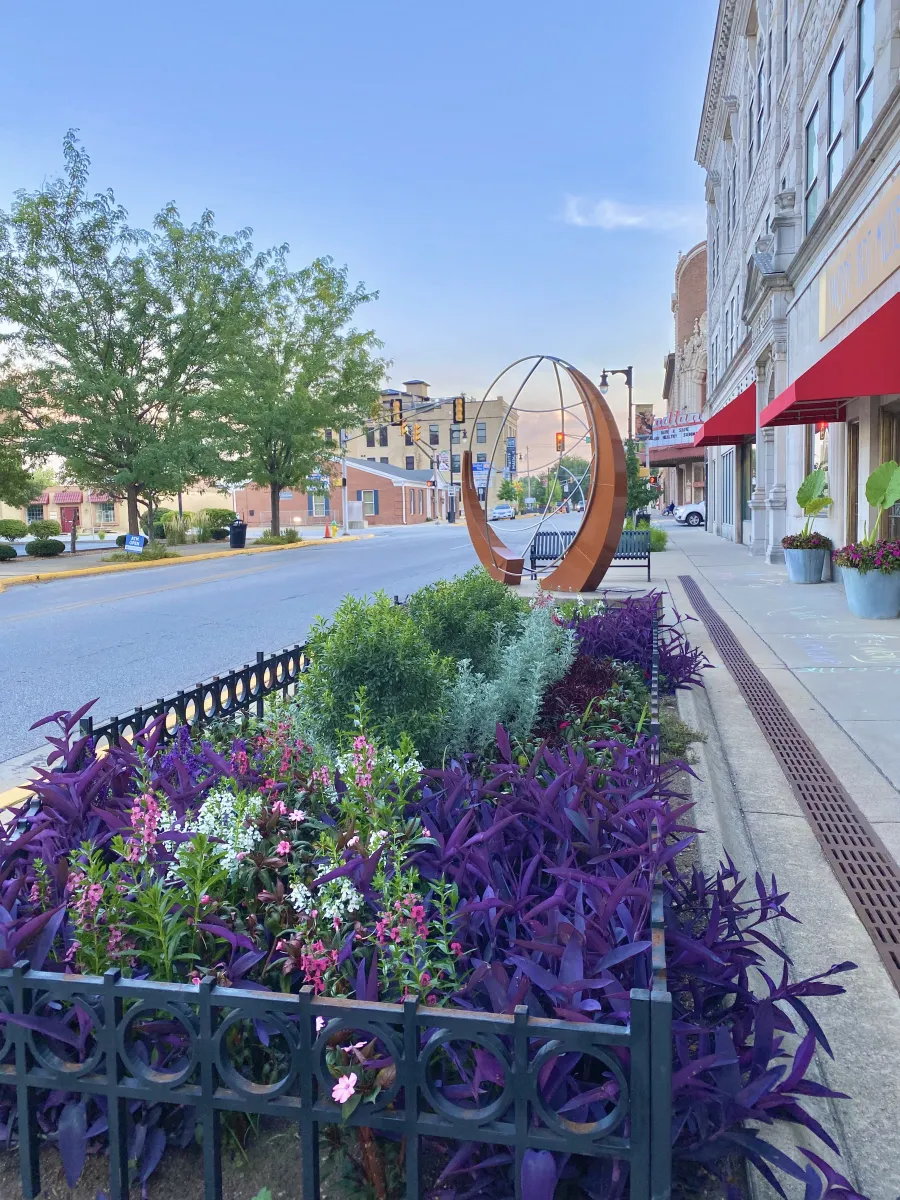 Photo: Terre Haute, via assets.simpleviewinc.com
In the late 1940s, Harold began corresponding with Dorothy after reading a letter she'd published in a science hobbyist circular. Their exchange lasted nearly fifteen years. Harold's contribution to the network was a granular, empirically grounded understanding of how different fuel mixtures behaved under different atmospheric pressure conditions — knowledge he'd accumulated through agricultural experience that had nothing to do with rockets and everything to do with how fire actually works when you're not in a laboratory.
His letters were dense with practical observation and almost entirely free of formal scientific notation. A NASA contractor who later reviewed copies of Harold's correspondence — brought to his attention by a mutual acquaintance in the 1960s — reportedly said that Harold had described a combustion dynamic that the contractor's team had spent six months trying to model mathematically, and that Harold had gotten there first by watching corn fields burn.
The Question That Credentialed Experts Didn't Ask
This is the thread that runs through all of them — Dorothy, Harold, and the dozen or so other figures who populated this informal network over its roughly twenty-year lifespan. What connected them wasn't training or institutional affiliation. It was a willingness to ask the obvious question, the one that specialists often stop asking because their training has taught them which questions are already settled.
A high school physics teacher in rural Nebraska named Calvin Mross spent four years corresponding with Dorothy about the thermal dynamics of re-entry — not because he had any particular expertise in the subject, but because his students kept asking him questions about it that he couldn't answer, which meant he had to think about it harder than anyone who already thought they knew the answer.
Calvin's re-entry correspondence contained, according to one account from a retired NASA engineer who encountered it in the 1970s, an intuitive framing of heat distribution across a curved surface that anticipated — by several years — a modeling approach that the agency's engineers developed independently and used in the design of heat shields.
Calvin never knew this. He died in 1961, eight years before the first moon landing.
Letters to the Government, Into the Void
Not everyone in the network was content to correspond only with each other. Dorothy, in particular, had a habit of sending carefully composed letters to government science offices, to university aerospace departments, and eventually to the early organizational predecessors of NASA. Most of these letters went unanswered. A few received form responses. One, sent in 1952 to an office of the National Advisory Committee for Aeronautics, received a reply that was polite, brief, and gave no indication that anyone had read past the first paragraph.
Dorothy kept carbon copies of all of them.
What's striking, reading that correspondence now, is not that the ideas were ignored — institutional gatekeeping is a story as old as institutions. What's striking is how precisely the questions these letter writers were asking mapped onto the problems that professional engineers would spend the next decade trying to solve. They were asking the right questions from the wrong zip codes, and the system had no mechanism for recognizing the difference.
The Dream That Lived in the Margins
America's official space history is written in mission reports and engineering schematics and the names of men whose contributions are carved into institutional memory. That history is real and it matters.
But there's another history, written in carbon copies and rural postmarks and the careful handwriting of people who never expected anyone important to read what they were saying. It's the history of curiosity without credential, of imagination unencumbered by the weight of what's already been decided, of ordinary Americans who looked up at the same sky as everyone else and asked different questions about what it would take to get there.
Dorothy Felch's files are held by a small historical society in central Kansas. Harold Birch's letters were donated to a county library by his grandchildren, who weren't sure what to do with them. Calvin Mross exists in no aerospace history that has ever been published.
The moon landing happened on July 20, 1969. The applause went to Houston. But some of the thinking that got us there started in places that never made it onto any official map — scrawled in longhand, folded into envelopes, and dropped into small-town mailboxes by people who had nothing to lose by dreaming out loud.