Mop in One Hand, Patent in the Other: The Invisible Men Who Invented Tomorrow's Tech
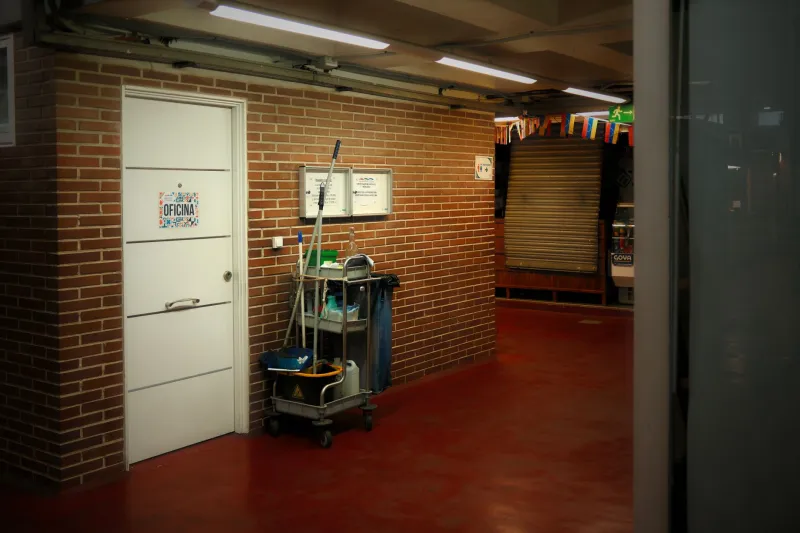
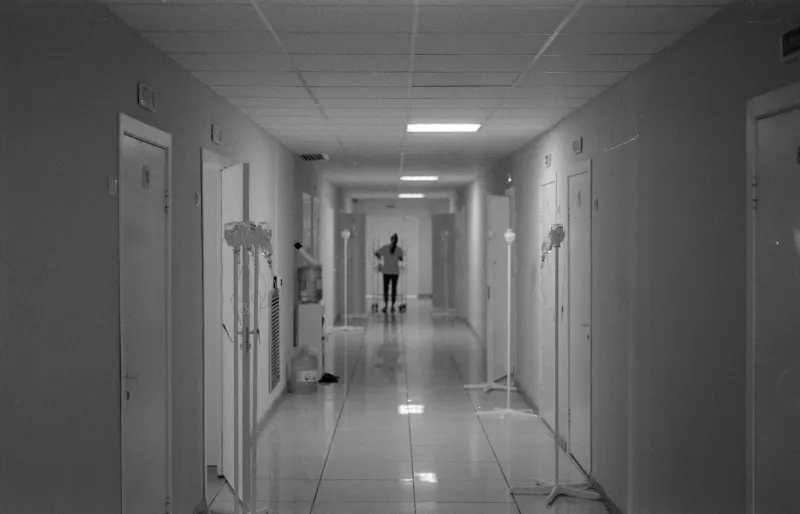
The lights in the research wing would go out around nine. The scientists would pack their notebooks, argue over the last cup of coffee, and head home to their families. And then the real work would begin — not theirs, but his. The man with the cart. The one who knew where every circuit board was stored, which chemical smelled wrong when left too long, and exactly how the centrifuge sounded when it was about to fail.
He wasn't supposed to be paying that close attention. But he was.
Across American history, some of the most consequential innovations were born not in the gleaming offices of credentialed researchers, but in the after-hours silence of laboratories, factories, and technical facilities — observed, sketched, and eventually patented by the people whose job descriptions said nothing about invention. These are their stories. Mostly forgotten. Occasionally recovered. Always astonishing.
The Man Who Knew the Machine Better Than Its Maker
In the late 1950s, a custodian named Clifton Webb worked the overnight shift at a small electronics manufacturing plant outside San Jose, California — the kind of place that would later be swallowed whole by what we now call Silicon Valley. Webb had a ninth-grade education, a bus pass, and an obsession with how things worked.
Every night, after the engineers left, he would study the prototype boards left on the workbenches. He wasn't supposed to touch them. He touched them anyway. He began keeping a handwritten notebook — part observation log, part sketch pad — documenting what he thought could be done differently. A faster solder connection here. A simpler relay configuration there.
By 1961, Webb had filed two patents through a sympathetic attorney who agreed to take the case for almost nothing. One of those patents — covering a simplified circuit relay design — was quietly purchased by a larger firm in 1963. Webb received a modest check. His name appeared nowhere in the company's annual report.
Historians of early Silicon Valley have since identified at least a dozen similar cases: workers in support roles who filed legitimate patents that were either absorbed by corporations, credited to supervisors, or simply buried under the weight of institutional indifference. The pattern was consistent enough that a 2014 paper from Stanford's technology history program called it "the invisible inventor problem" — a systemic failure to recognize that proximity to innovation, when combined with curiosity, produces inventors regardless of job title.
The Lab Cleaner Who Understood Chemistry
Rachel Simms cleaned laboratories at a pharmaceutical research facility in New Jersey for eleven years. She had no chemistry degree. What she had was a habit of reading the labels on everything she wasn't supposed to touch and a memory sharp enough to notice when something changed.
In 1978, she noticed that a particular solvent the researchers used to clean equipment left a residue that, under certain conditions, appeared to inhibit bacterial growth on the metal surfaces. The researchers hadn't flagged it — they were focused on the compound they were testing, not the cleaning solution. Simms mentioned it to her supervisor. He dismissed it. She mentioned it again, more specifically, describing what she'd observed over several weeks. He told her to focus on her job.
So she wrote it down. She kept writing. She found a community college professor willing to look at her notes, and together — over eighteen months of weekends — they developed the observation into something testable. A patent application followed in 1981. It covered a surface-treatment process with applications in medical equipment sterilization.
The patent was granted. The royalties were modest but real. Simms never left her cleaning job. When asked why, she said she liked the work. She also said the lab was where she did her best thinking.
Solitude as a Superpower
What connected figures like Webb and Simms wasn't raw genius in the conventional sense. It was something more practical: uninterrupted time in places where ideas were already circulating, combined with the freedom that comes from having nothing to prove.
Researchers under institutional pressure are often too focused on their assigned problem to notice adjacent possibilities. The person cleaning up after them has no assigned problem. They have only curiosity and time.
A 2019 study from MIT's Sloan School found that a disproportionate number of small-scale patents filed between 1940 and 1980 came from individuals working in technical support, maintenance, or facilities roles at research institutions. The study's authors described this as "peripheral innovation" — breakthroughs that happened at the edges of formal research programs, by people who weren't supposed to be innovating at all.
The Factory Floor Philosopher
In 1947, a maintenance worker named George Dillard at a textile plant in North Carolina developed a mechanical loom adjustment that reduced thread breakage by nearly 30 percent. He'd been watching the machines for six years. He understood them the way a musician understands a particular instrument — not through theory, but through ten thousand hours of listening.
His supervisor filed the patent. Dillard's name was not included. He found out two years later when he saw the company newsletter celebrating the innovation. He didn't sue. He couldn't afford to. But he kept inventing. Over the next fifteen years, Dillard filed seven patents of his own — working through the same community attorney network that had helped others like him — and eventually licensed two of them to manufacturers in the Carolinas.
He died in 1981 with a small but real legacy in textile engineering. His obituary mentioned that he worked in maintenance. It did not mention the patents.
What We Owe the Night Shift
The stories of Webb, Simms, Dillard, and dozens like them don't fit neatly into the mythology America tells about invention. We like our innovators in garages and corner offices, not pushing carts down fluorescent-lit hallways at midnight. But the hallway is where the real observation happens. The cart is where the thinking gets done.
The next time you hear about a breakthrough that changed an industry, it's worth asking who else was in the room. And who was cleaning it afterward.
Because sometimes the person who understood the machine best was the one nobody thought to ask.