The Voice in the Backyard
William Edmondson was pushing fifty when God started talking to him through the limestone.
It was 1931 in Nashville, and Edmondson had spent most of his adult life collecting other people's trash. He swept streets, hauled garbage, and worked odd jobs around the city's rail yards. His hands were calloused from decades of manual labor, his back bent from years of lifting and carrying. By any measure, he was exactly what polite society expected him to be: invisible, replaceable, forgotten.
Then the voices started.
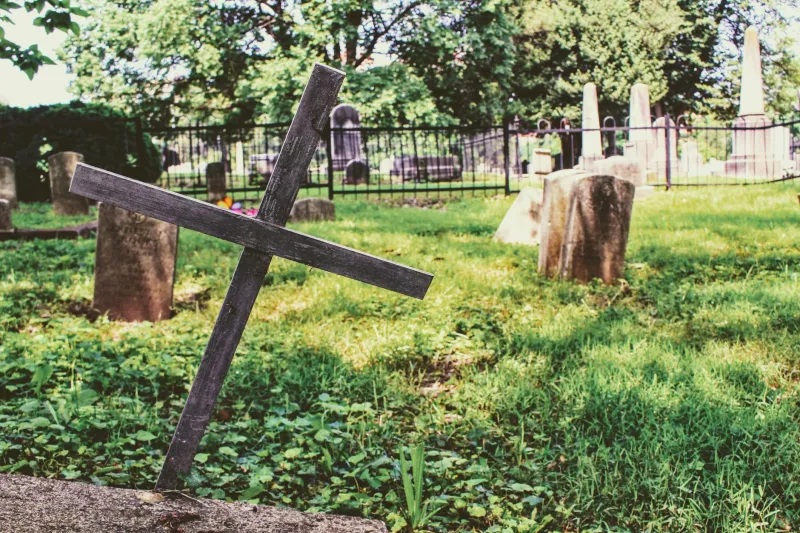
"I was out in the driveway with some old pieces of stone when I heard a voice telling me to cut figures," Edmondson would later recall. "First thing I carved was a tombstone for my sister. Then I made tombstones for all my family."
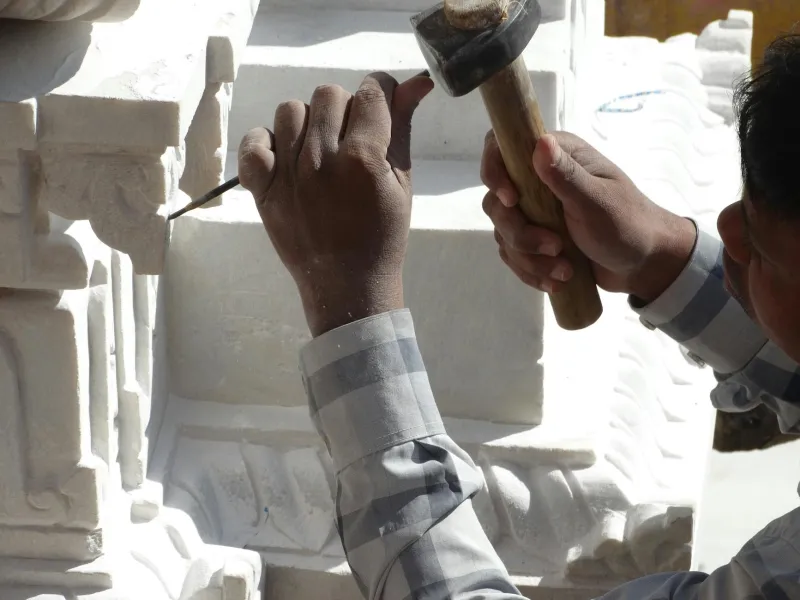
What happened next defied every rule about how art careers are supposed to work. This self-taught janitor with zero formal training, zero connections, and zero institutional support began creating sculptures that would eventually hang in the world's most prestigious galleries. His tools? A railroad spike, a few chisels, and an unshakeable belief that his hands were being guided by something larger than himself.
Breaking Stone, Breaking Barriers
Edmondson's early work focused on tombstones and grave markers. Word spread through Nashville's Black community about the garbage collector who could make stone speak. Families began commissioning headstones from him, drawn to his unique style that blended folk tradition with an almost mystical sense of form.
But Edmondson wasn't content with cemetery work. The same divine inspiration that told him to carve tombstones soon pushed him toward more ambitious subjects. He began creating figures of preachers, angels, and biblical characters. His "Crucifixion" series captured the raw emotion of faith with a directness that formally trained artists rarely achieved.
What made his work extraordinary wasn't technical perfection—it was honesty. Edmondson carved what he saw and felt, unfiltered by art school conventions or market expectations. His figures were bold, sometimes crude, always authentic. They possessed a spiritual intensity that came from someone who genuinely believed he was channeling divine will through limestone.
"I just take my time and go down in my mind," he explained to anyone who asked about his process. "My mind tells me what to cut."
The Gallery That Changed Everything
By the mid-1930s, Edmondson's backyard workshop had become something of a local curiosity. Visitors would stop by to watch him work, drawn by stories of the mystical stone carver. Among those visitors was Louise Dahl-Wolfe, a fashion photographer who immediately recognized something special in Edmondson's sculptures.
Dahl-Wolfe photographed Edmondson's work and shared the images with Alfred Barr Jr., the founding director of the Museum of Modern Art in New York. What Barr saw in those photographs challenged everything the art establishment thought it knew about American sculpture.
Here was work that was simultaneously primitive and sophisticated, naive and profound. Edmondson's pieces possessed a power that couldn't be taught in any classroom or acquired through any degree program. They were the product of pure creative instinct, uncompromised by institutional expectations.
In 1937, the Museum of Modern Art did something unprecedented: they offered William Edmondson, a Black sanitation worker from Nashville with no formal art training, a solo exhibition. He became the first African American artist to receive such an honor at MoMA.
Beyond the Breakthrough
The exhibition, titled "Sculptures by William Edmondson," opened to critical acclaim. Art critics struggled to categorize Edmondson's work, eventually settling on terms like "folk art" and "outsider art"—labels that, while limiting, at least acknowledged that something genuinely new was happening.
Edmondson himself remained largely unaffected by the sudden attention. He continued living in his modest Nashville home, continued carving in his backyard workshop, and continued listening to the voices that had started it all. Fame didn't change his process or his purpose.
"I ain't nothing but a old man that works in stone," he would say when pressed about his newfound celebrity. "The Lord just tells me what to make."
The art world's embrace of Edmondson's work opened doors for other self-taught artists, particularly those from marginalized communities whose voices had been systematically excluded from mainstream galleries and museums. His success proved that authentic artistic vision could emerge from anywhere—even from the most unlikely places.
The Legacy of Listening
William Edmondson continued carving until his death in 1951, never fully grasping the magnitude of what he had accomplished. He had broken through barriers that had seemed impenetrable, not through calculated career moves or institutional networking, but through the simple act of listening to his inner voice and having the courage to follow where it led.
Today, Edmondson's sculptures are held in major collections worldwide. The Smithsonian, the Metropolitan Museum of Art, and dozens of other prestigious institutions display his work alongside pieces by the most celebrated artists in history.
But perhaps Edmondson's greatest legacy isn't found in museums—it's in the example he set for anyone who has ever felt their voice doesn't matter, their background isn't good enough, or their dreams are too big for their circumstances. He proved that artistic truth doesn't require permission from gatekeepers. Sometimes the most profound statements come from the most unexpected sources.
In the end, William Edmondson's story isn't just about art—it's about the power of believing in something larger than yourself, even when the rest of the world can't see what you're seeing. Sometimes, the only qualification you need is the courage to pick up a chisel and start carving.