Sidelined Superstars: How Five Legends Learned Their Greatest Lessons From the Bench
The Classroom Nobody Wants
Every sports fan knows the stories of natural-born superstars who dominated from day one. But some of the most revolutionary athletes in American sports history learned their most valuable lessons not on the field, but watching from the sidelines. These five legends turned their time as benchwarmers, cuts, and rejects into advanced degrees in athletic excellence.
Michael Jordan: The High School Cut Who Redefined Greatness
In 1978, a 15-year-old Michael Jordan was cut from his high school varsity basketball team at Emsley A. Laney High School in North Carolina. Coach Clifton "Pop" Herring chose a taller player instead, relegating Jordan to the junior varsity squad. For most teenagers, this would have been devastating. For Jordan, it became the foundation of everything that followed.
 Photo: Michael Jordan, via footwearnews.com
Spending that year on JV while watching varsity games from the stands taught Jordan something no amount of early success could have provided: the hunger that comes from being overlooked. He studied every move the varsity players made, analyzing their techniques and identifying their weaknesses. More importantly, he learned to channel rejection into fuel.
Jordan later credited that cut as the moment he developed his legendary work ethic. "It was good because it made me know what disappointment felt like," he said. "And I knew that I didn't want to have that feeling ever again." The player who would become synonymous with clutch performance learned his most important lesson not from winning, but from being told he wasn't good enough.
Tom Brady: The Backup Who Studied Champions
When Tom Brady arrived at the University of Michigan in 1995, he was seventh on the depth chart. Seventh. For two years, he watched practice from the sidelines, studying how quarterbacks prepared, how they read defenses, and how they handled pressure. While his teammates were gaining game experience, Brady was earning a master's degree in football intelligence.
Those sideline years taught Brady something that would define his entire career: the value of preparation over natural talent. He learned to dissect game film with obsessive detail, to understand defensive schemes at a level that most quarterbacks never reach, and to see the game not just as a participant but as a student.
When Brady finally got his chance to start, he brought an understanding of the game that went far beyond his physical abilities. His time on the bench had taught him to think three plays ahead, to recognize patterns that other quarterbacks missed, and to remain calm under pressure because he had mentally rehearsed every possible scenario.
Jackie Robinson: The Military Rejection That Built a Revolutionary
Before Jackie Robinson broke baseball's color barrier, he faced rejection from an institution that should have valued his athletic ability: the U.S. Army. Despite being a four-sport star at UCLA, Robinson was initially denied admission to Officer Candidate School because of his race. When he finally was accepted, he was later court-martialed for refusing to move to the back of a segregated bus.
These experiences with institutional racism taught Robinson something crucial for his later role in baseball: how to maintain dignity under pressure while fighting for change. His time facing military discrimination prepared him for the verbal abuse, death threats, and systemic obstacles he would encounter as the first Black player in Major League Baseball.
Robinson learned to channel anger into focus, to use rejection as motivation rather than defeat. When Branch Rickey chose him to integrate baseball, it wasn't just because of his athletic ability — it was because his experiences with rejection had forged the mental toughness needed to change American sports forever.
Diana Taurasi: The Bench Player Who Revolutionized Women's Basketball
When Diana Taurasi arrived at the University of Connecticut in 2000, she expected to be an immediate star. Instead, coach Geno Auriemma kept her on the bench for much of her freshman season, watching as upperclassmen led the team to a national championship. For a player who had dominated high school basketball, this was a humbling experience.
But Auriemma's decision was strategic. He wanted Taurasi to learn the game at a deeper level before unleashing her talent. Those bench minutes taught her to read defenses like a chess master, to understand spacing and timing in ways that pure athleticism couldn't provide. She studied how championship teams functioned, how great players made their teammates better, and how individual brilliance could be channeled into team success.
When Taurasi finally became UConn's primary weapon, she brought a basketball IQ that transformed women's college basketball. She didn't just score — she orchestrated. Her time on the bench had taught her that the greatest players don't just dominate; they elevate everyone around them.
Jerry Rice: The Small-School Reject Who Redefined Excellence
Jerry Rice wasn't recruited by major college football programs. Despite setting high school records in Mississippi, big-time schools overlooked him because he played at a tiny school in a rural area. He ended up at Mississippi Valley State, a historically Black university that most NFL scouts never visited.
 Photo: Jerry Rice, via clearviewfenceafrica.co.za
This rejection by major programs taught Rice something that would define his entire career: that talent without work ethic means nothing, but work ethic without limits can overcome any disadvantage. At Mississippi Valley State, Rice developed training routines that bordered on obsessive. He ran hills until his legs gave out, caught passes until his hands bled, and studied game film like he was preparing for final exams.
When Rice finally reached the NFL, he brought a work ethic that shocked even professional athletes. His legendary training regimen — running hills in the San Francisco heat, catching hundreds of passes in practice, maintaining peak physical condition well into his 40s — came from understanding that he had to outwork everyone because he had already been overlooked once.
The Sideline Advantage
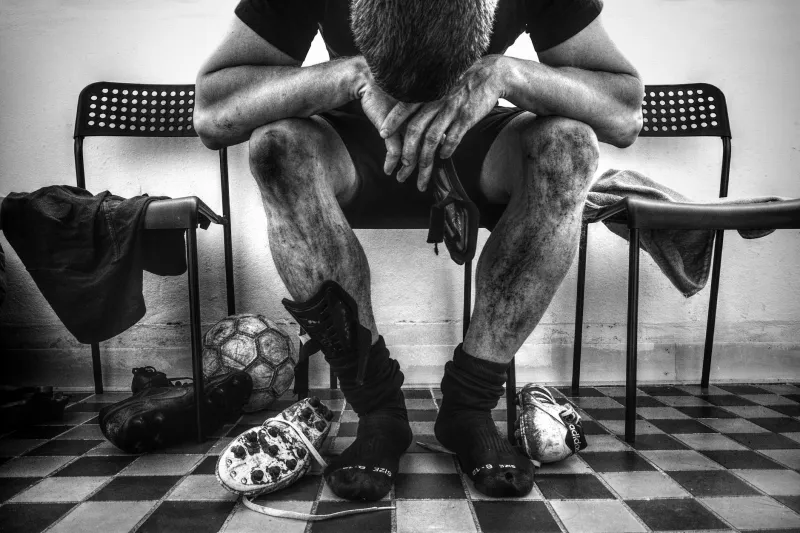
What these five athletes learned from their time on the outside was something that early success never could have taught them: that greatness isn't just about natural talent, but about understanding the game at a deeper level. Their rejection forced them to become students before they became stars.
They learned to watch, to analyze, to understand not just what to do but why it worked. They developed mental toughness that came from overcoming disappointment rather than avoiding it. Most importantly, they learned that being underestimated could be the greatest advantage of all.
Their stories remind us that sometimes the most valuable education happens not when you're the star of the show, but when you're forced to watch from the sidelines and figure out how to earn your way back. The bench, it turns out, can be the best classroom of all.