The Reform School That Built a Jazz King: Louis Armstrong's Accidental Path to Greatness
The Shot That Changed Everything
New Year's Eve, 1912. A thirteen-year-old kid named Louis Armstrong grabbed his stepfather's .38 revolver and fired six shots into the New Orleans sky. The celebration was over in seconds. By morning, young Louis was sitting in the back of a police wagon, headed for the Colored Waifs' Home for Boys—a reform school that would accidentally launch one of the most extraordinary careers in American music.
Most kids would have seen this as the end of the world. Louis Armstrong saw it as Tuesday.
The Unlikely Conservatory
The Colored Waifs' Home wasn't exactly Juilliard. Run with military precision by Captain Joseph Jones and Professor Peter Davis, the institution was designed to straighten out New Orleans' most troubled Black youth. But buried within its rigid structure was something unexpected: a brass band program that would make musical history.
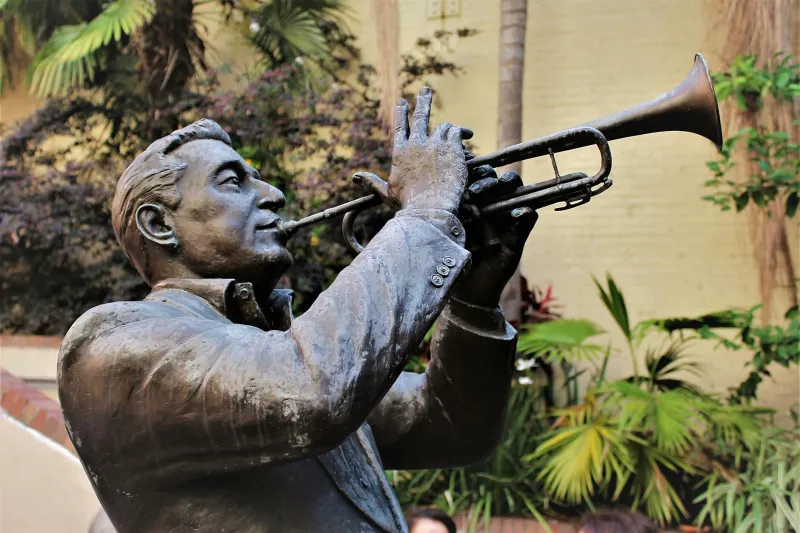
Professor Davis handed Armstrong a cornet and changed the trajectory of American culture forever. Here was a kid from the roughest neighborhoods of New Orleans, now getting formal music instruction he never could have afforded on the outside. The reform school that was supposed to punish him instead gave him the gift that would define his life.
"I went to bed that night a sinner," Armstrong would later reflect about his arrest. "But I woke up sanctified."
From Troublemaker to Bandleader
Within months, Armstrong wasn't just playing in the school band—he was leading it. His natural talent, combined with Davis's disciplined instruction, transformed a street kid into a musician with serious chops. The boy who had been firing guns into the sky was now making music that would eventually reach around the world.
The reform school gave Armstrong something his chaotic home life never could: structure, mentorship, and daily practice. While other kids his age were running wild in the French Quarter, Louis was learning scales, developing his embouchure, and discovering the power of his voice—both literally and figuratively.
The Gift Hidden in the Punishment
Here's the twist that makes Armstrong's story so remarkable: he stayed at the Waifs' Home for nearly two years, not because he had to, but because he wanted to. When his mother finally came to take him home, Louis had found something worth staying for. The place designed to contain him had become the place that set him free.
This wasn't just about learning to play an instrument. Armstrong was discovering discipline, purpose, and the transformative power of music. The skills he developed during those reform school years—leadership, performance confidence, and musical technique—would carry him from the streets of New Orleans to the stages of New York and beyond.
The Long Echo of a Short Mistake
By the time Armstrong left the Waifs' Home in 1914, he was no longer the same kid who had fired that gun. He was a musician. More than that, he was a young man who understood that greatness often comes disguised as hardship.
Armstrong would go on to revolutionize jazz, break racial barriers, and become one of America's most beloved cultural ambassadors. He'd play for presidents and paupers, record classics like "What a Wonderful World," and influence generations of musicians. But it all traced back to that New Year's Eve mistake and the reform school that accidentally became his conservatory.
The Maverick's Lesson
Louis Armstrong's story reminds us that life's biggest breaks often come wrapped in what looks like bad luck. That gun shot on New Year's Eve 1912 seemed like the worst thing that could happen to a thirteen-year-old kid. Instead, it was the best.
Sometimes the path to extraordinary isn't through the front door of opportunity—it's through the back door of consequence. Armstrong didn't choose to go to reform school, but he chose what to do with his time there. That choice made all the difference.
In a world that loves to talk about following your dreams, Armstrong's story offers a different wisdom: sometimes your dreams find you in the most unexpected places. Even behind bars. Even when you're thirteen and scared and far from home.
The kid who fired six shots into the New Orleans sky didn't know he was also firing the starting gun on one of the most influential musical careers in American history. But that's exactly what mavericks do—they find greatness in the most unlikely places, even when those places are designed to hold them back.
Especially then.