From Hill Country Dirt to White House Power: How a Poor Boy's Library Obsession Rewrote American History
The Kid Who Wouldn't Stay Put
In the dust-choked Hill Country of Texas, where cotton fields stretched endlessly under a merciless sun, most folks knew their place. But Lyndon Baines Johnson — all elbows and ears at six feet four — never got that memo.
Born in 1908 to a family that ping-ponged between barely scraping by and flat broke, Johnson grew up in a world where dreams were luxuries most couldn't afford. His father Sam bounced from failed cotton farming to small-time politicking, while his mother Rebekah — a college graduate in a land where high school was considered fancy — read poetry to her children by lamplight.
It was Rebekah who first showed young Lyndon that words had power. But it was the tiny Johnson City library where he discovered they could be weapons.
A Library Card Worth More Than Gold
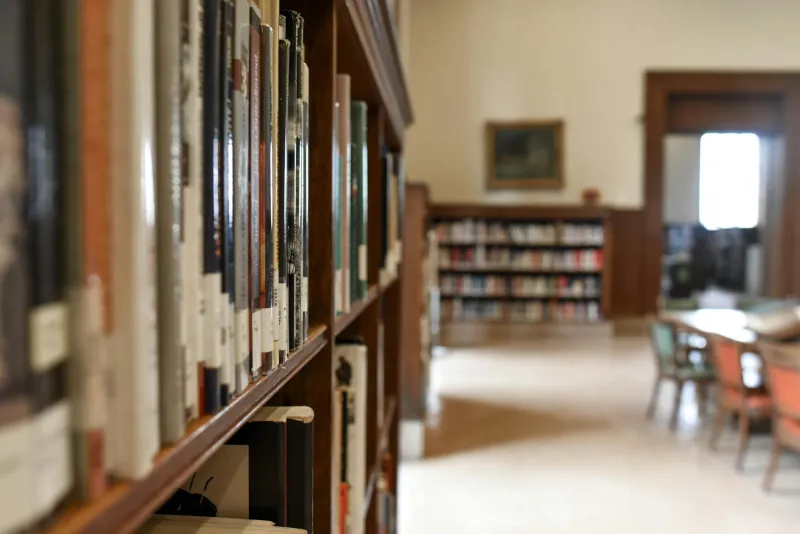
While other kids spent summers swimming in the Pedernales River, Johnson haunted the town's modest library like a man possessed. He devoured biographies of great men — Lincoln, Jefferson, Napoleon — studying their rise to power with the intensity of a general planning battle.
The librarian, Mrs. Kate Deadrich, watched this gangly teenager check out armloads of books on politics and history. "That boy reads like he's trying to eat the whole world," she once told a friend. She wasn't wrong.
Johnson didn't just read about power — he dissected it. How did poor boys become presidents? What did they say? How did they move? He practiced their gestures in front of his bedroom mirror, memorized their speeches, and most importantly, learned that the right words at the right moment could open doors that birth and money couldn't.
The Art of Making Himself Essential
By high school, Johnson had figured out something his classmates missed: proximity to power was almost as good as having it yourself. He sweet-talked his way into jobs that put him close to influential people — first as a janitor at the local newspaper, then as an aide to the school principal.
He had a gift for making himself indispensable. Need someone to organize the school debate? Johnson was your man. Want the gymnasium cleaned spotless for the big dance? Johnson would stay until midnight to make it shine. He understood that being useful was the first step to being powerful.
After graduating, Johnson scraped together enough money for Southwest Texas State Teachers College. Even there, he couldn't afford to be just another student. He talked his way into a job as assistant to the college president, a position that gave him access to the kind of people who could change his life.
The Elevator Pitch That Changed Everything
Johnson's big break came through pure audacity. In 1931, he was teaching school in Houston when he heard that Congressman Richard Kleberg needed a secretary in Washington. Most people would have sent a resume and hoped for the best. Johnson drove 300 miles to Corpus Christi and showed up at Kleberg's office unannounced.
The story goes that Johnson cornered Kleberg in an elevator and delivered a pitch so compelling that by the time they reached the top floor, he had the job. What did this 23-year-old kid from nowhere say that convinced a wealthy congressman to hire him? Johnson never revealed the exact words, but those who knew him suspected it was some combination of flattery, ambition, and a promise to work harder than anyone else.
The Capitol Hill Hustle
Washington in the 1930s was a gentleman's club where breeding mattered more than brains. Johnson arrived with neither pedigree nor polish, but he had something more valuable: hunger.
While other congressional aides treated their jobs as stepping stones to law school or family businesses, Johnson turned his position into a masterclass in power dynamics. He mapped out who mattered, who influenced whom, and most crucially, what everyone wanted.
He worked 16-hour days, not because he was told to, but because every extra hour was an opportunity to make another connection, learn another secret, or do another favor that might pay dividends later. He turned his tiny office into a nerve center of information, becoming the guy who knew which senators were feuding, which bills had real support, and which lobbyists had the deepest pockets.
From Servant to Master
Johnson's transformation from congressional aide to political powerhouse wasn't overnight, but it was inevitable. He parlayed his Washington connections into a job running the Texas National Youth Administration, then used that platform to build a statewide political network. When a congressional seat opened up in 1937, Johnson was ready.
The boy who once checked out books on great leaders was now writing his own chapter. He would go on to become Senate Majority Leader, Vice President, and ultimately President — signing the Civil Rights Act and launching the Great Society programs that reshaped America.
The Library Card Legacy
Johnson's story isn't just about one man's rise from poverty to power. It's about the democratizing force of knowledge and the American belief that anyone — even a scrawny kid from the Texas Hill Country — can rewrite their destiny.
In a world where privilege often determines possibility, Johnson proved that sometimes the most powerful tool isn't money or connections — it's the ability to learn, adapt, and convince others that you belong in rooms where you were never supposed to be.
That library card didn't just give him access to books. It gave him access to the idea that his circumstances didn't have to define his future. And in the end, that might be the most American story of all.