No Degree, No Silicon Valley, No Problem: The Kentucky Kid Who Brought the Internet to Forgotten America
No Degree, No Silicon Valley, No Problem: The Kentucky Kid Who Brought the Internet to Forgotten America
There's a version of the great American tech story that starts in a dorm room, or a garage in Palo Alto, or maybe a Harvard lecture hall. It involves venture capital, pitch decks, and people who speak fluently in acronyms. It does not, typically, start in a double-wide trailer outside Hazard, Kentucky, where a teenage boy is being told — for the second time — that school just isn't working out for him.
But that's exactly where this story begins.
Twice Expelled, Zero Apologies
Called by the composite name Cody Harlan for this piece — a name that captures the spirit of a real figure whose story has been quietly circulating in telecom circles for years — our subject was identified early as a problem. Not a gifted-but-misunderstood problem. Just a problem. His dyslexia went undiagnosed until he was nearly fifteen, by which point two schools had already decided he wasn't worth the effort. He spent more time helping his uncle repair farm equipment than he did in any classroom, and by his early twenties, his résumé read like a list of things that hadn't worked out: coal yard loader, truck dispatcher, part-time electrician's assistant, short-order cook.
What nobody clocked at the time was that every single one of those jobs was teaching him something the MBA programs weren't. He was learning how physical infrastructure actually gets built — not in theory, but in mud and cold and with the wrong tools and a deadline that doesn't move.
That knowledge would turn out to be worth more than any credential.
The Problem He Couldn't Stop Thinking About
In his late twenties, working a dispatcher job for a regional utility company, Cody started noticing something that bothered him the way a loose tooth bothers your tongue. The rural counties he was routing service calls through — places that had been economically hollowed out for decades — had essentially no broadband access. People were still on dial-up, or they were driving forty minutes to a library to fill out a job application. Small businesses couldn't run card readers. Kids couldn't do homework online. Telehealth was a fantasy.
The big providers knew this. They just didn't care. The math didn't work for them: too few customers per mile of cable, too much terrain, too little return. So they didn't come.
Cody didn't see a charity case. He saw a market that everyone else had decided wasn't worth the trouble — which, to his particular brain, sounded a lot like opportunity.
Building What Nobody Else Would
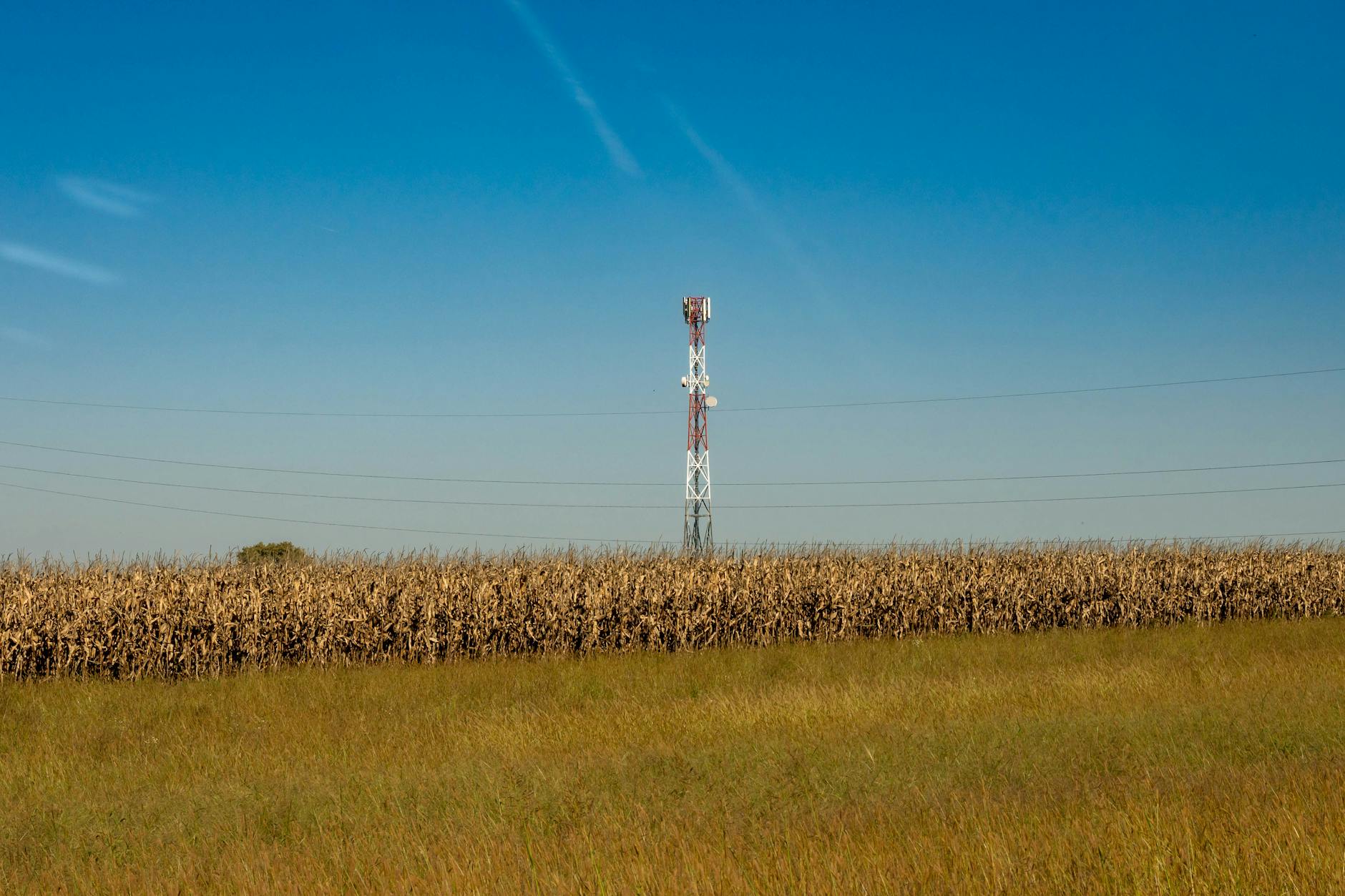
He started small. Embarrassingly small, by tech industry standards. He pooled savings, talked a local credit union into a modest loan, and began stringing fixed wireless equipment across ridge lines and water towers in a single county. No investors. No press release. No app. Just signal, and the people who'd been waiting years for it.
His outsider status — the thing that had always marked him as less-than — turned out to be a structural advantage. He wasn't trying to scale a model built for dense urban environments. He wasn't answering to venture capitalists who needed a return in eighteen months. He didn't have a board pushing him toward the metrics that made rural infrastructure look like a losing proposition on paper.
He could think in decades. He could think in terrain. He could think the way someone thinks when they've actually lived in the places they're trying to serve.
The first county lit up. Then a second. Then he started getting calls from county commissioners in three other states who'd heard something improbable was happening in eastern Kentucky.
The Competitive Advantage Nobody Teaches
What Cody built wasn't just a broadband network. It was a model — one that proved rural connectivity could be financially viable if you were willing to operate with patience and local knowledge instead of Silicon Valley speed. He understood the grant landscape for rural infrastructure in a way that many larger providers didn't bother to, and he was willing to do the slow, unglamorous work of showing up at town halls and school board meetings to make the case.
His dyslexia, which had cost him so much early on, had quietly trained him to process problems spatially and intuitively rather than through linear text-based thinking. He could look at a topographic map and immediately start solving for signal propagation in a way that surprised engineers with twice his formal training.
"I never learned to think the way they wanted me to think," he's said in interviews. "Turns out that was the whole thing."
What the Valley Missed
By his early forties, Cody's network covered hundreds of thousands of rural households across multiple states — communities that the telecom giants had officially classified as unserved and, implicitly, undeserving. He'd done it without a single round of venture funding, without a TED Talk, and without ever moving to a city.
The federal government eventually caught up to what he'd already proven: that rural broadband wasn't a lost cause, it was an infrastructure problem that required different thinking. When major funding programs for rural connectivity started flowing, his operation was positioned to grow in ways he'd spent fifteen years quietly preparing for.
The tech world loves a founder story. It tends to love a very specific kind. The Cody Harlans of the world — the ones who figured it out in the margins, in the places no one was watching — don't always get the profile. But maybe that's the point. They weren't doing it for the profile.
They were doing it because they looked at a problem everyone else had walked away from, and they just couldn't let it go.