The Price of a Letter
Henry Bibb was twenty-three years old when he first held a pen with criminal intent. The year was 1837, and he sat in a cramped Kentucky cabin, sweat beading on his forehead as he traced letters onto a piece of stolen paper. Each stroke could mean freedom or death.
What made this moment extraordinary wasn't just the courage it took to forge travel papers in a state where such acts meant the gallows. It was that three years earlier, Bibb couldn't even spell his own name.
School of Hard Knocks
Born into slavery in Shelby County, Kentucky, Bibb learned early that knowledge was contraband. His master, like most slaveholders, understood that literacy was rebellion waiting to happen. Teaching a slave to read was illegal in Kentucky, punishable by heavy fines and imprisonment.
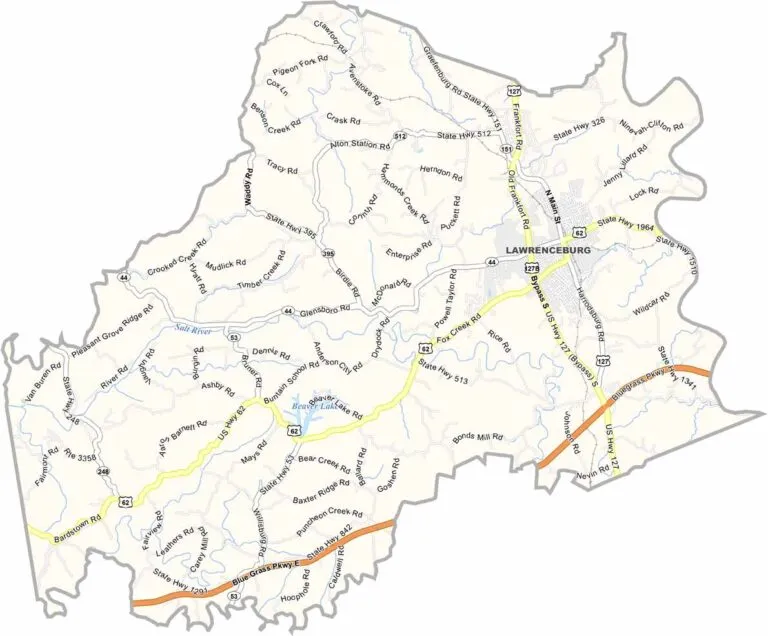 Photo: Shelby County, Kentucky, via uscountymaps.com
But Bibb was stubborn in the way that changes history.
His first teacher was a fellow slave who knew only the alphabet. They met in secret, scratching letters in the dirt with sticks, erasing the evidence before dawn. When that man was sold away, Bibb found another teacher – a poor white boy who traded reading lessons for food stolen from the plantation kitchen.
The boy taught Bibb to sound out words from a tattered spelling book. Progress was glacial. Every lesson carried the risk of brutal punishment. But Bibb pressed on, driven by a simple belief: words were weapons, and he intended to arm himself.
The Art of Deception
Bibb's first escape attempt came in 1834. He made it forty miles before slave catchers dragged him back in chains. His second attempt lasted three days. His third, two weeks. Each failure taught him something new about the geography of freedom – and the power of paperwork.
Free blacks and escaped slaves needed travel passes to move through most Southern states. Without proper documentation, any black person on the road was assumed to be a runaway. Bibb realized that freedom wasn't just about running faster or hiding better. It was about writing better.
He began studying every official document he could find. He memorized the language of legal papers, the flourishes of official signatures, the exact wording of travel permits. In stolen moments, he practiced penmanship on scraps of paper, developing the steady hand of a professional clerk.
By his sixth escape attempt, Bibb had become a master forger.
Freedom in Black and White
The documents Bibb created for his final escape were works of art. He forged a travel pass identifying him as a free black man traveling on business. He created supporting papers – letters of recommendation, business correspondence, even a fake bill of sale proving his horse was legally purchased.
The deception worked perfectly. When stopped by suspicious whites, Bibb presented his papers with the confidence of a man who belonged. His educated speech, learned through years of secret study, convinced skeptics that he was indeed free.
But Bibb's greatest act of forgery was yet to come: he would forge an entirely new identity as one of America's most powerful voices for abolition.
The Underground Publisher
Once free, Bibb didn't simply disappear into anonymity. Instead, he did something that terrified slaveholders across the South: he started writing.
In 1849, Bibb founded The Voice of the Fugitive, an anti-slavery newspaper published from Windsor, Canada, just across the river from Detroit. The paper became a lifeline for escaped slaves, publishing coded messages about safe houses, warning about slave catchers, and providing practical advice for life in freedom.
 Photo: Windsor, Canada, via icycanada.com
Bibb wrote with the authority of lived experience. His editorials carried the weight of a man who had felt the lash, worn the chains, and outsmarted the system. Unlike many abolitionists who spoke from moral conviction alone, Bibb wrote from the deep well of personal suffering and triumph.
The paper's circulation grew rapidly, reaching thousands of readers across the United States and Canada. Southern authorities banned it, but copies circulated secretly through underground networks. Slaveholders offered rewards for Bibb's capture, dead or alive.
The Power of the Pen
Bibb's influence extended far beyond his newspaper. He became a sought-after speaker at anti-slavery rallies, his compelling personal story drawing crowds across the North. His autobiography, Narrative of the Life and Adventures of Henry Bibb, became a bestseller, opening Northern eyes to the brutal realities of slavery.
But perhaps his greatest contribution was proving that education could not be contained. Every escaped slave who learned to read became a potential publisher, every literate freedman a possible pamphleteer. Bibb's example inspired countless others to see literacy not just as personal advancement, but as collective liberation.
The Last Word
Henry Bibb died in 1854, still in exile in Canada, still fighting slavery with words rather than weapons. His Voice of the Fugitive had helped hundreds of escaped slaves find freedom and community. His writings had influenced public opinion across two nations.
The man who began life as human property had transformed himself into something slaveholders feared most: an educated black man with a printing press and nothing left to lose.
Bibb's story reminds us that sometimes the most powerful revolutions begin not with armies or weapons, but with a stolen lesson in a moonlit field. In his hands, the alphabet became artillery, and literacy became liberation itself.