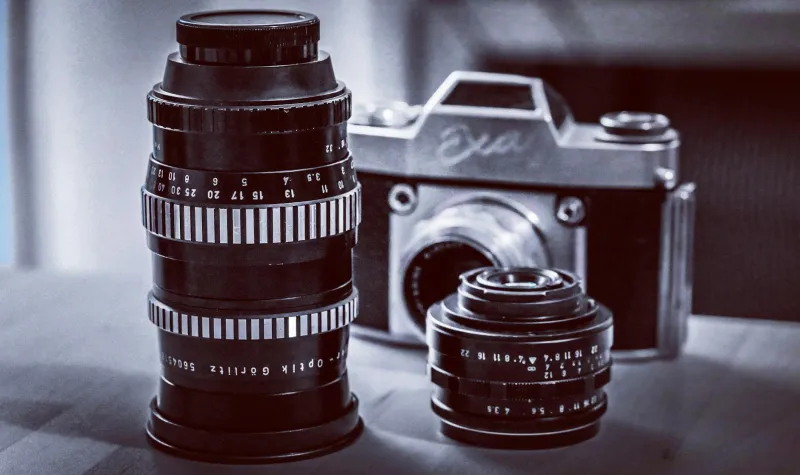
The pawnshop camera cost twenty-five dollars. Gordon Parks had exactly that much in his pocket — money earned clearing tables and dodging racial slurs at a Minneapolis country club where members treated him like furniture that occasionally moved. It was 1937, and Parks was twenty-four years old, homeless, and sleeping in abandoned cars when winter temperatures dropped below freezing.
That camera would become the most important purchase in the history of American visual storytelling.
Cotton Fields to Country Clubs
Parks grew up in Fort Scott, Kansas, where poverty wasn't just economic — it was existential. The youngest of fifteen children born to a tenant farmer, he learned early that the world had already decided what his life would look like. When his mother died during his teens, relatives made it clear he wasn't welcome. At fifteen, he was on his own.
The next decade was a masterclass in survival. Parks picked cotton, worked as a busboy, played piano in brothels, and briefly tried semi-professional basketball. Each job taught him something about invisibility — how society looked through people like him, how being unseen could be both protection and prison.
But it was at that Minneapolis country club, watching wealthy white families pose for portraits, that Parks first understood photography's power. These people were documenting their lives, claiming their place in history. Meanwhile, entire communities — his communities — remained invisible.
The Weapon of Choice
That pawnshop camera became Parks' declaration of war against invisibility. He taught himself everything — exposure, composition, darkroom chemistry — by reading photography magazines in the public library. His first serious photographs captured the everyday dignity of Black life in Minneapolis: families at dinner, children playing, workers heading home.
The breakthrough came in 1942 when Parks won a fellowship with the Farm Security Administration in Washington, D.C. His supervisor, Roy Stryker, gave him advice that would define his career: "The camera is a weapon. Use it."
Parks' most famous photograph from this period almost never happened. He'd been documenting government workers when he met Ella Watson, a Black cleaning woman earning less in a day than white employees made in an hour. Parks posed Watson in front of an American flag, mop and broom in hand, in what became "American Gothic, Washington, D.C." — a devastating commentary on the gap between American ideals and American reality.
The image caused an uproar. Some called it unpatriotic. Parks called it honest.
Breaking the Color Barrier at Life
In 1948, Life magazine — the most influential visual publication in America — hired Parks as its first Black photographer. The magazine's editors weren't making a progressive statement; they needed someone who could access communities their white photographers couldn't reach.
Parks understood the assignment and then rewrote it entirely.
Over the next two decades, he didn't just document civil rights — he helped define how America understood itself. His photo essays on poverty in Harlem, segregation in the South, and the emerging Black middle class forced white readers to confront realities they'd successfully ignored.
The 1956 essay "The Restraints: Open and Hidden" followed a Black family through a typical day in the segregated South, showing how racism infected every moment from morning coffee to bedtime prayers. The photographs were beautiful and brutal, artistic and activist.
Beyond the Frame
What separated Parks from other documentary photographers was his refusal to stop at observation. He used his camera to open doors, then walked through them into other creative territories. He became a successful filmmaker, novelist, poet, and composer — the first person to direct a major Hollywood film featuring an all-Black cast.
But photography remained his primary language for speaking truth. During the height of the civil rights movement, Parks' images provided visual vocabulary for a national conversation about justice. His portraits of Malcolm X, Muhammad Ali, and ordinary families fighting extraordinary circumstances helped Americans understand that civil rights wasn't about politics — it was about humanity.
The Long Exposure
Parks continued photographing until his death in 2006, always returning to the themes that defined his early work: dignity in the face of adversity, beauty in unexpected places, the complex relationship between suffering and strength.
Looking back, that twenty-five-dollar pawnshop camera purchase represents something profound about American possibility. A homeless busboy with no formal education became one of the most important visual artists of the twentieth century — not despite his background, but because of it.
Parks understood what suffering could teach about seeing. He knew that people who'd been invisible possessed unique clarity about what needed to be shown. His camera didn't just capture images — it captured the conscience of a nation still learning to see itself clearly.
In a country that often mistakes comfort for wisdom, Gordon Parks proved that sometimes the most important perspectives come from the margins, and the most powerful weapons are the ones that reveal rather than destroy.