He Couldn't Read a Classroom Blackboard — So He Rewired How America Talks
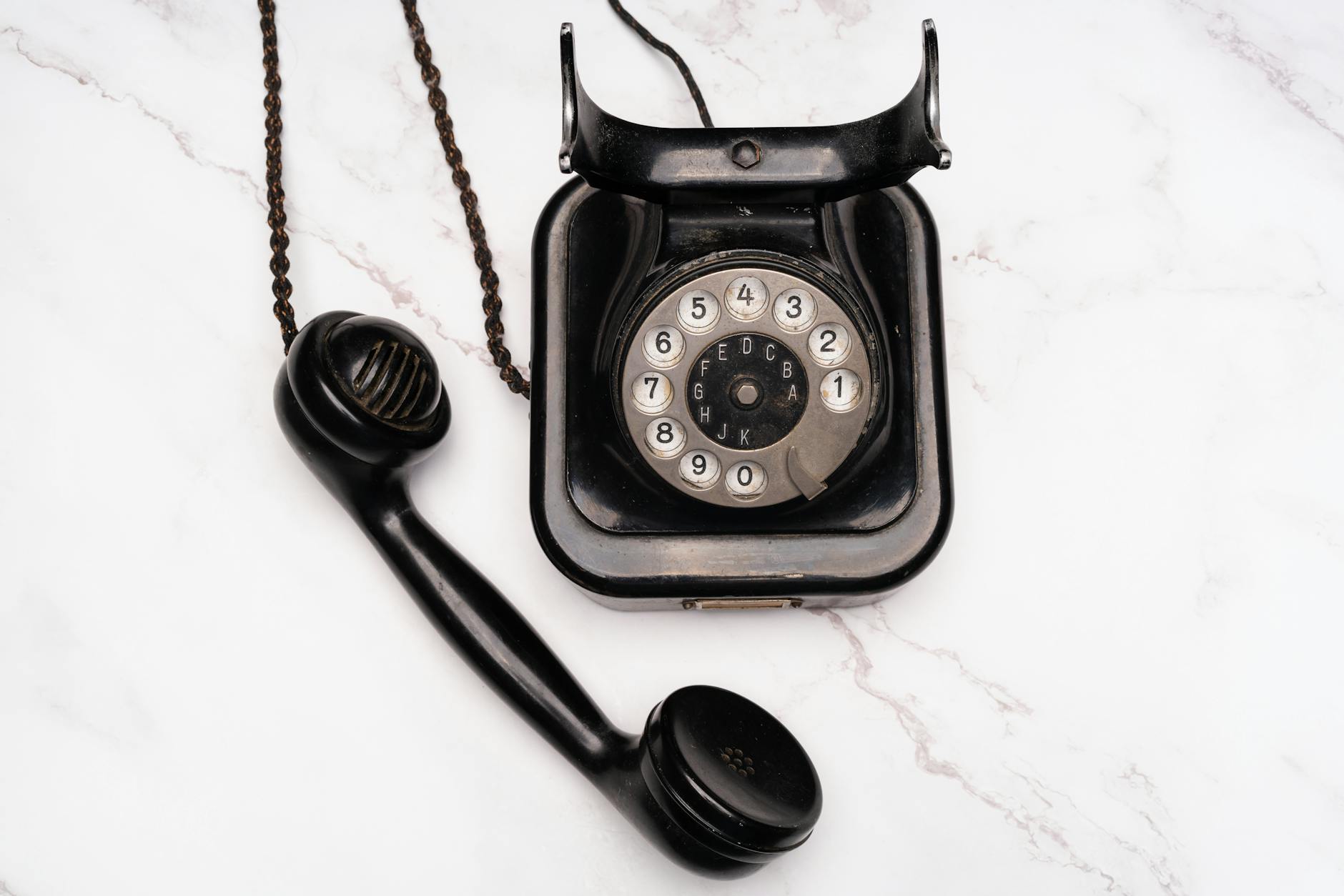
He Couldn't Read a Classroom Blackboard — So He Rewired How America Talks
There's a version of American invention history that gets told in museums and textbooks — clean timelines, famous names, dramatic eureka moments. And then there's the version that actually happened, where the people who built the infrastructure of modern life were often broke, dismissed, and operating out of barns and borrowed workshops while the credentialed world looked the other way.
Almon Brown Strowger belongs firmly in that second version.
He was a Kansas undertaker. Not a scientist. Not an engineer. Not a man with any obvious business in reshaping how an entire nation communicated with itself. But by the time the 19th century clicked over into the 20th, Strowger had done exactly that — and the telephone switching system he invented from scratch, driven by equal parts frustration and obsession, would remain the technical backbone of American telephone networks well into the 1980s.
The fact that he got there despite severe dyslexia, a rural upbringing that offered almost no formal education, and a string of financial disasters that would have ended most people's ambitions? That part rarely makes it into the textbook version.
The Farm, the Classroom, and the First 'No'
Strowger was born in 1839 in Penfield, New York, the son of a farming family with limited means and even more limited patience for a boy who struggled to make sense of written words. Dyslexia wasn't a recognized condition in mid-19th-century America — it was just called slowness, or worse. Teachers had little use for students who couldn't keep up, and Strowger received the kind of education that consisted mostly of being told he wasn't cut out for academic life.
What he had instead was a mechanical mind that worked differently from the people around him. He could see how things fit together in three dimensions before he could articulate it in words. He tinkered. He watched. He asked questions that adults found inconvenient.
He served in the Civil War, came home, tried teaching school for a while — a career choice that, given his own educational trauma, says something about his stubbornness — and eventually landed in Kansas City, Missouri, running a funeral parlor. It was unglamorous work, but it was his.
The Phone Call That Changed Everything
The story of Strowger's great invention starts not with inspiration but with fury.
In the 1880s, telephone exchanges were operated by human switchboard operators — mostly women — who physically connected callers by plugging cables into the right ports. The system depended entirely on the operator's honesty and competence. And in Kansas City, Strowger became convinced that the local operator was redirecting his business calls to a competitor — specifically, to the husband of the woman running the switchboard.
Whether or not that suspicion was entirely accurate is a matter of historical debate. What isn't debatable is what Strowger did next. Rather than complain or accept the situation, he decided to build a machine that would make human operators unnecessary altogether.
He had no engineering degree. No laboratory. No investors. What he had was a cardboard collar box, some pins, and a pencil — and a mind that, freed from the constraints of conventional thinking, could visualize a rotary switching mechanism that would allow callers to connect themselves directly.
He called it the automatic telephone exchange. The world would eventually call it the Strowger switch.
Patents, Poverty, and the Long Fight to Be Taken Seriously
Filing for a patent in 1889 was only the beginning of Strowger's battle. Getting investors to take a Kansas undertaker seriously was another thing entirely. The telephone industry at the time was dominated by Bell Telephone, a company that had every reason to protect the existing operator-based system and very little interest in entertaining a disruptive alternative from a man with dirt under his fingernails and no institutional backing.
Strowger was rejected, ignored, and condescended to with remarkable consistency. He sold his funeral business to fund development. He partnered with his nephew and a small group of believers who helped refine the mechanism. He incorporated the Strowger Automatic Telephone Exchange company in 1891 and installed the world's first automatic exchange in La Porte, Indiana, in that same year — a system serving 75 subscribers that worked exactly as he'd envisioned it.
The telephone establishment paid attention, even if grudgingly. The efficiency was undeniable. The system scaled. And slowly, city by city, the Strowger switch began replacing human operators across the country.
He sold his patents in 1896 for $1,800 — a figure that, in retrospect, represents one of the great undervaluations in American business history. The technology he created would generate enormous wealth for others while Strowger himself died in relative obscurity in 1902, having never fully benefited from the infrastructure revolution he'd started.
The Blueprint Nobody Framed
What makes Strowger's story worth sitting with isn't the injustice of his financial outcome, though that's real. It's the specific texture of how he got from a Kansas funeral parlor to a patent that reshaped American life.
He didn't succeed despite his unconventional background. In a meaningful sense, he succeeded because of it. The formal engineering establishment of the late 19th century was deeply invested in the existing system. It took someone with no loyalty to that system — someone who experienced it as an obstacle rather than a ladder — to imagine replacing it entirely.
His dyslexia, which had closed doors throughout his childhood, had also forced him to develop a spatial and mechanical intelligence that operated outside the linear, text-based thinking that dominated professional education. His poverty meant he had no safety net, which concentrated his focus in ways that comfort rarely does.
And his stubbornness — the same quality that had made him a difficult student and an inconvenient presence in professional circles — turned out to be the most valuable asset he owned.
There's a reason the most disruptive companies of the last three decades have so often been built by people who either dropped out of or were pushed out of conventional systems. The system, by definition, optimizes for what the system already values. The people who change it are usually the ones the system couldn't find a use for.
Strowger couldn't read a blackboard. He built the machine that let America hear itself.
That's not a footnote. That's the whole story.