From Cotton Fields to Courtroom: The Janitor Who Became America's Most Unlikely Federal Judge
The Boy Who Picked Cotton by Moonlight
In the summer of 1932, while most eight-year-olds were playing marbles or listening to radio shows, Thomas Jefferson Williams was dragging a cotton sack nearly as tall as himself through the scorching Mississippi Delta heat. His family's sharecropping contract demanded every able body in the fields, and Thomas had been "able" since he could walk.
The Williams family lived in a two-room shack with no electricity, no running water, and walls so thin you could hear the neighbor's baby crying three houses down. Thomas's father worked sixteen-hour days for a white landowner who kept the books in his favor, ensuring the Williams family stayed perpetually in debt. His mother took in washing when she wasn't in the fields, her hands cracked and bleeding from lye soap and rough fabric.
But Thomas had a secret weapon his parents didn't know about: an insatiable hunger for the written word.
The Library That Changed Everything
Every Tuesday, the county's traveling library—a converted Ford pickup with shelves bolted to the truck bed—would park outside the colored school for exactly one hour. While other kids played kickball, Thomas devoured everything he could get his hands on: adventure stories, history books, and most importantly, a tattered copy of "The Law and You: A Citizen's Guide."
The librarian, Miss Sarah Henderson, noticed the boy who always lingered until the very last minute, clutching books like lifelines. She began setting aside extra reading material for him—old law journals her brother had left behind after failing the bar exam, civics textbooks from the white school's discards, even newspaper clippings about court cases.
"That boy's got something burning inside him," she told her sister. "Question is whether the world will let it catch fire or stamp it out."
Night School in a Janitor's Closet
By age sixteen, Thomas had exhausted every book the traveling library could provide. He'd also grown too old for school—the colored school only went through eighth grade, and his family needed his labor income. So he did what countless young Black men in the Delta did: he left.
But Thomas didn't head north to the factories of Detroit or Chicago like most migrants. Instead, he caught a Greyhound to Jackson, Mississippi's capital, with $14 in his pocket and a cardboard suitcase held together with rope.
He found work as a night janitor at the Hinds County Courthouse, mopping floors and emptying trash cans while lawyers and judges slept. The job paid $18 a week—more money than his family had ever seen—but more importantly, it gave him access to something priceless: a law library.
Every night after finishing his cleaning rounds, Thomas would settle into the courthouse library with a borrowed flashlight and teach himself the law. He read every case book, every statute, every legal precedent he could find. When he encountered terms he didn't understand, he wrote them down and looked them up in the massive legal dictionary during his lunch breaks.
The Unlikely Law Student
For seven years, Thomas lived in a boarding house room barely larger than a closet, spending every free moment studying. He saved every penny, eating nothing but beans and cornbread most nights. His fellow janitors thought he was crazy—"What's a colored boy gonna do with all that book learning?" they'd ask.
In 1955, at age twenty-eight, Thomas walked into the admissions office of the University of Mississippi Law School. The secretary looked up from her typewriter, confused. The university had been forced to admit its first Black student just two years earlier, but law school? That was still unthinkable.
"I'd like to apply for admission," Thomas said quietly, placing his hand-typed application on the desk.
The secretary stared at him for a long moment. "Boy, you sure you're in the right place?"
"Yes ma'am," Thomas replied. "I've been preparing for this my whole life."
Against All Odds
What happened next would have broken most people. Thomas's application was rejected—not because of his qualifications, which were actually exceptional, but because of his race. So he applied to Howard University Law School in Washington D.C., historically Black and willing to judge him on merit alone.
He sold everything he owned to pay for his first semester, arriving in D.C. with one suitcase and $127. To pay for law school, he worked three jobs: janitor at a hotel from midnight to 6 AM, dishwasher at a diner from 7 AM to 2 PM, and library assistant from 3 PM to 7 PM. He attended classes in the evening and studied whenever he could grab a moment.
His classmates, most from middle-class families, couldn't understand how he stayed awake during lectures. They didn't know he'd been training for this schedule his entire life.
The Lawyer Nobody Expected
Thomas graduated from Howard Law School in 1959, third in his class despite working 80 hours a week throughout school. He passed the Mississippi bar exam on his first try—one of only three Black lawyers in the entire state.
For the next fifteen years, he practiced civil rights law from a cramped office above a barbershop in Jackson. He took cases no one else would touch: sharecroppers cheated by landowners, domestic workers fired without cause, students suspended for peaceful protests. He rarely got paid in cash—instead, clients brought him vegetables from their gardens, quilts their grandmothers had made, or promises to pay "when things got better."
But Thomas was building something bigger than a law practice. He was building a reputation as someone who understood justice not from textbooks, but from lived experience.
The Judge Who Remembered Where He Came From
In 1974, President Jimmy Carter nominated Thomas Jefferson Williams to the Federal District Court for the Southern District of Mississippi. The confirmation hearings were brutal—senators questioned whether someone without an Ivy League pedigree could handle complex federal cases.
"Senator," Thomas replied to one particularly condescending question, "I may not have gone to Harvard, but I've got a PhD in understanding how the law affects real people. Sometimes that matters more than where you learned to parse Latin phrases."
He was confirmed by a narrow margin, becoming the first Black federal judge in Mississippi's history.
Justice from the Ground Up
For the next twenty-three years, Judge Williams presided over cases that would reshape American civil rights law. His courtroom became known as a place where ordinary people could get extraordinary justice—not because he bent the law, but because he understood its true purpose.
In landmark cases involving voting rights, employment discrimination, and educational equality, Williams consistently ruled in favor of expanding opportunities for those society had forgotten. His opinions, written in clear, accessible language rather than legal jargon, became required reading in law schools across the country.
"The law isn't a club to beat people with," he often told young lawyers. "It's a ladder to help them climb up."
The Legacy of an Unlikely Path
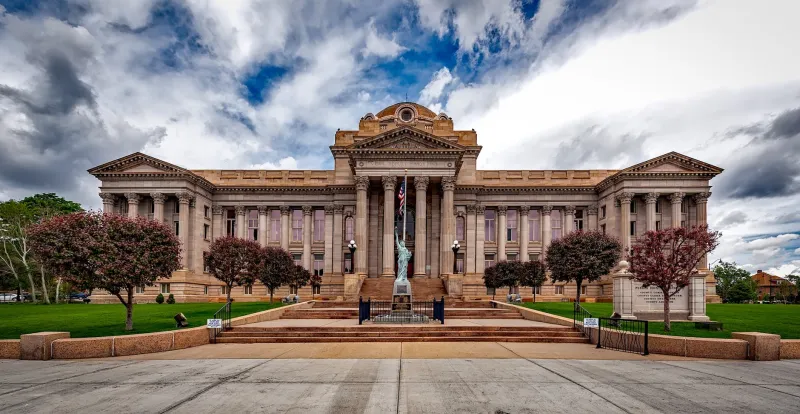
When Judge Williams retired in 1997, the courthouse he had once cleaned as a young man was renamed in his honor. The boy who had picked cotton by moonlight had become one of the most respected jurists in America.
But perhaps his greatest achievement wasn't any single ruling or legal precedent. It was proving that wisdom doesn't require pedigree, that justice can emerge from injustice, and that sometimes the people best equipped to fix a broken system are those who've felt its weight firsthand.
Today, the Thomas Jefferson Williams Federal Courthouse in Jackson stands as a monument to an unlikely truth: that in America, the distance between a sharecropper's shack and a federal bench isn't measured in miles, but in determination. And sometimes, just sometimes, determination is enough.