The Desperate Gamble
Thomas Kellerman clutched the freshly forged diploma in his sweaty palm as he stepped off the train in Millerville, Kansas, in September 1912. The nineteen-year-old had never attended college—hell, he'd barely finished eighth grade before his father's death forced him to work the family farm. But with his mother sick and creditors circling, he'd spent his last five dollars on fake credentials from a diploma mill in Chicago.
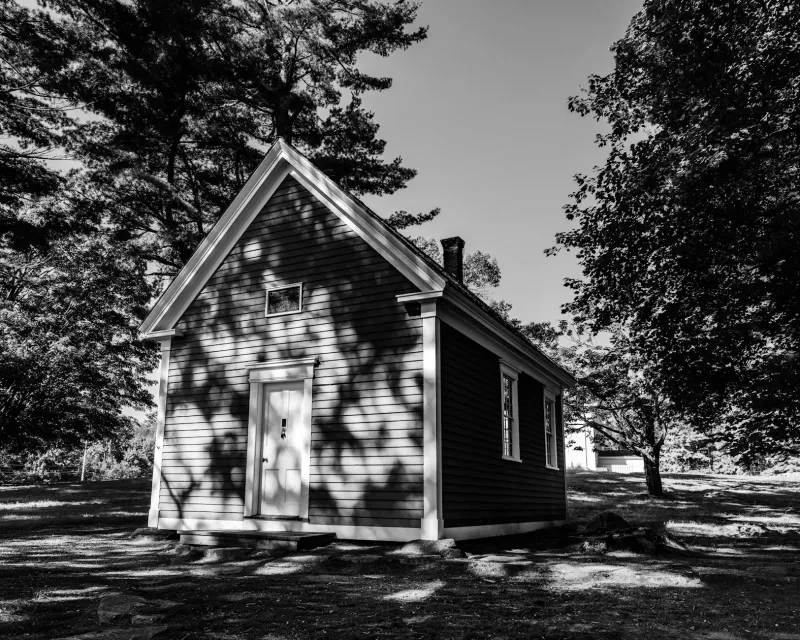
The one-room schoolhouse needed a teacher, and Kellerman needed a miracle.
What happened next would accidentally reshape American education, though it would take decades before anyone realized it.
When Desperation Breeds Innovation
Kellerman's first day was a disaster waiting to happen. Twenty-three students, ages six to sixteen, crammed into a space meant for half that number. No textbooks newer than 1898. A pot-belly stove that barely heated the corners. And Kellerman, terrified of being exposed, had no lesson plans.
So he did what desperate people do: he improvised.
Instead of lecturing from behind a desk—the traditional method he'd observed during his own brief schooling—Kellerman moved among his students. He asked questions. He listened to their answers. When twelve-year-old Mary couldn't grasp long division, he didn't make her copy problems fifty times. He used corn kernels from his lunch to demonstrate the concept.
When the older boys grew restless during reading time, Kellerman didn't reach for the switch. He assigned them to help the younger children, discovering that teaching someone else forced them to truly understand the material themselves.
The Accidental Revolutionary
Without realizing it, Kellerman was pioneering what educators would later call "student-centered learning" and "peer instruction"—concepts that wouldn't gain academic legitimacy until the 1960s.
His students thrived. Test scores soared. Parents began traveling from neighboring towns to see the miracle teacher in action. By his second year, the school board had built an addition to accommodate the influx of new students.
Kellerman's methods were spreading organically. Teachers from other districts would visit during lunch breaks, watching through windows as he conducted what looked like controlled chaos but produced unprecedented results. They returned to their own classrooms with fragments of his approach: the movement, the questions, the peer teaching.
The System Takes Notice
By 1915, Kansas State Superintendent of Public Instruction William Hodgman had heard whispers about the miracle teacher in Millerville. He arrived unannounced one October morning, expecting to debunk what he assumed were exaggerated rumors.
Instead, he found something extraordinary.
Students were engaged. Learning was happening at multiple levels simultaneously. The older children weren't just babysitting the younger ones—they were genuinely teaching, reinforcing their own knowledge while building leadership skills. Kellerman had somehow created a self-sustaining educational ecosystem.
Hodgman spent three days observing, taking copious notes. He left convinced he'd witnessed the future of American education.
The Quiet Revolution
Within two years, Hodgman had incorporated elements of "the Millerville Method" into official state curriculum guidelines. Teacher training programs began emphasizing movement and student interaction. The rigid, lecture-based model that had dominated American classrooms for generations started giving way to something more dynamic.
Neighboring states took notice. Missouri adopted similar guidelines in 1918. Colorado followed in 1920. The ripple effect spread slowly but steadily across the Midwest, carried by traveling educators and progressive school boards hungry for innovation.
Kellerman, meanwhile, kept teaching. He'd married a local girl, bought a small house near the school, and settled into what appeared to be a conventional life. Only he knew the truth: every day was a high-wire act, every interaction with visiting officials a potential exposure.
The Secret Dies with the Man
Kellerman taught for thirty-seven years, retiring in 1949 as one of Kansas's most respected educators. He'd trained dozens of teachers, influenced thousands of students, and helped reshape American education. State officials offered him positions in the education department. Universities invited him to speak at conferences.
He politely declined everything that might require background verification.
The truth died with him in 1963. His widow, cleaning out his desk, found the faded diploma mill certificate tucked behind a photograph of his first class. She burned it in the backyard, never telling anyone what she'd discovered.
The Lasting Legacy
By the 1960s, educational researchers were "discovering" and codifying teaching methods that Thomas Kellerman had stumbled upon fifty years earlier out of pure desperation. Student-centered learning became pedagogical gospel. Peer instruction earned academic respectability. Movement-based classrooms became standard practice.
None of the researchers knew they were legitimizing the innovations of a frightened farm boy who'd never earned the right to stand in front of a classroom.
When Fraud Serves Truth
Kellerman's story raises uncomfortable questions about credentialism and institutional gatekeeping. His fake diploma was wrong—but his impact was undeniably right. He transformed education not despite his lack of formal training, but perhaps because of it. Unburdened by "proper" methodology, he was free to respond to what actually worked.
The irony is inescapable: American education was revolutionized by someone the system would never have allowed through the front door.
Sometimes the most qualified person for the job is the one without qualifications to prove it.