Brushstrokes Behind Bars: The Condemned Man Who Turned Death Row Into an Art Studio
The Canvas Nobody Expected
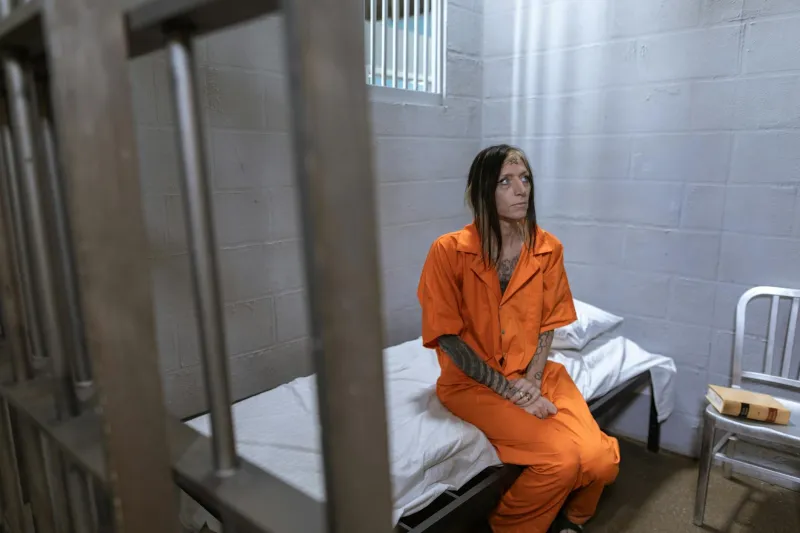
In a 6x9 foot cell on death row, surrounded by concrete walls that had witnessed decades of despair, something impossible was happening. A man who had never held a paintbrush before his conviction was creating art that would eventually hang in galleries across America, challenge legal precedents, and force an entire nation to confront uncomfortable questions about redemption, humanity, and the places where beauty chooses to bloom.
This isn't a story about innocence or guilt. It's about what happens when the human spirit refuses to surrender, even when society has already written the final chapter.
From Violence to Vision
Jesse Williams arrived on death row in 1987 with nothing but time and a rage that threatened to consume him. The 23-year-old had lived a life marked by poverty, violence, and the kind of systematic failures that pipeline young men from broken neighborhoods to prison cells. The state of Texas had scheduled his execution, and by all accounts, his story was over before it really began.
But isolation does strange things to the human mind. Some prisoners break. Others find religion. Williams discovered something else entirely: he found he could see the world differently when he closed his eyes and imagined it onto paper.
It started with pencil sketches on the margins of legal documents. Guards noticed the intricate drawings—portraits of fellow inmates, landscapes he remembered from childhood, faces of family members he might never see again. The detail was startling. The emotion was undeniable. This was not the work of someone passing time; this was art.
The Warden's Gamble
Warden Patricia Rodriguez had seen everything in her twenty years running the death row facility. She'd watched men find God, lose their minds, and everything in between. But she'd never seen anything like Williams' drawings. Against protocol and her better judgment, she made a decision that would change everything: she allowed Williams to have real art supplies.
"I caught hell for it," Rodriguez would later recall. "But there was something about those drawings. They weren't angry. They weren't violent. They were... hopeful. And I thought, what's the harm in letting a man hope?"
The harm, as it turned out, was that Williams' hope was contagious.
When Art Becomes Evidence
With proper materials, Williams' talent exploded. His paintings—vibrant oils that seemed impossible to create in such a sterile environment—began depicting scenes of stunning beauty. Children playing in sunlit fields. Elderly couples holding hands on park benches. Mothers cradling babies. These weren't the works of a hardened killer; they were windows into a soul that seemed to understand love, loss, and redemption in ways that defied his circumstances.
Word spread through the prison system, then beyond. A local art teacher, Maria Santos, heard about Williams' work and requested to see it. What she found left her speechless. "I've taught art for thirty years," she said. "Jesse's work had a technical proficiency that typically takes decades to develop, but more than that, it had soul. You don't teach soul."
Santos became Williams' first advocate, then his teacher, conducting lessons through the bars of his cell. Soon, other volunteers joined her. The death row art program was born not from policy or planning, but from the simple recognition that genius doesn't choose convenient places to emerge.
The Gallery That Changed Everything
In 1994, seven years after Williams picked up his first real paintbrush, something unprecedented happened: his work was displayed in a Houston gallery. The exhibition, titled "Beauty Behind Bars," drew crowds, critics, and controversy in equal measure.
Art collectors who had no idea of the paintings' origin bid aggressively. Critics praised the "raw emotional honesty" and "surprising technical sophistication." Only when the artist's identity was revealed did the real conversation begin.
How do you separate art from artist? Can beauty emerge from darkness? Does talent deserve recognition regardless of its source? These weren't academic questions anymore—they were hanging on gallery walls, forcing viewers to confront their own assumptions about human nature and second chances.
The Ripple Effect
Williams' success opened doors that had been welded shut. Other inmates began requesting art supplies. Prison officials, initially resistant, found that artistic programs reduced violence and improved mental health outcomes. What started as one warden's compassionate gamble became a model replicated across the country.
Legal advocates seized on Williams' transformation as evidence of rehabilitation. His paintings became exhibits in appeals, visual proof that people could change, grow, and contribute to society even from the most restrictive circumstances. While Williams' death sentence was never overturned, his case helped establish precedents for considering artistic achievement in clemency hearings.
Beyond the Walls
By the time Williams died of natural causes in 2018—still on death row, but having lived far longer than anyone expected—his paintings had been featured in museums from New York to Los Angeles. Art schools studied his techniques. Criminologists cited his case in research on rehabilitation. Most importantly, his story had fundamentally changed how America thought about the people it locks away.
"Jesse proved that creativity is one of the most human things we possess," said Dr. Robert Chen, who studied prison art programs for two decades. "You can take away someone's freedom, their possessions, their future—but you cannot take away their ability to create meaning from meaninglessness."
The Legacy of Unlikely Beauty
Today, prison art programs exist in facilities across America, many tracing their origins back to that first decision to give a condemned man a paintbrush. Williams' paintings still sell at auction, with proceeds supporting programs for at-risk youth—a final twist that would have seemed impossible when his story began.
The man who was supposed to be forgotten instead became unforgettable. In a system designed to warehouse society's unwanted, he found a way to create beauty that forced everyone to look. His brushstrokes didn't just capture images—they captured imaginations, challenged assumptions, and proved that human potential can flourish in the most unlikely soil.
Sometimes the most powerful art comes not from comfort, but from the desperate need to prove that we are more than our worst moments. Jesse Williams spent thirty years on death row, but his real sentence was life—life as an artist, a teacher, and a reminder that genius doesn't ask permission before it blooms.