From the Mines to the Mind: How Appalachia's Forgotten Son Cracked the Code of Memory
The Kid Nobody Expected
In 1962, a scrawny kid from eastern Kentucky got expelled from high school for asking too many questions—the wrong kind of questions, according to his principal. He didn't challenge authority out of rebellion. He challenged it because he couldn't afford not to. His family was poor. School was a luxury that required fitting in, and fitting in meant accepting what you were told without digging deeper.
He didn't have that option.
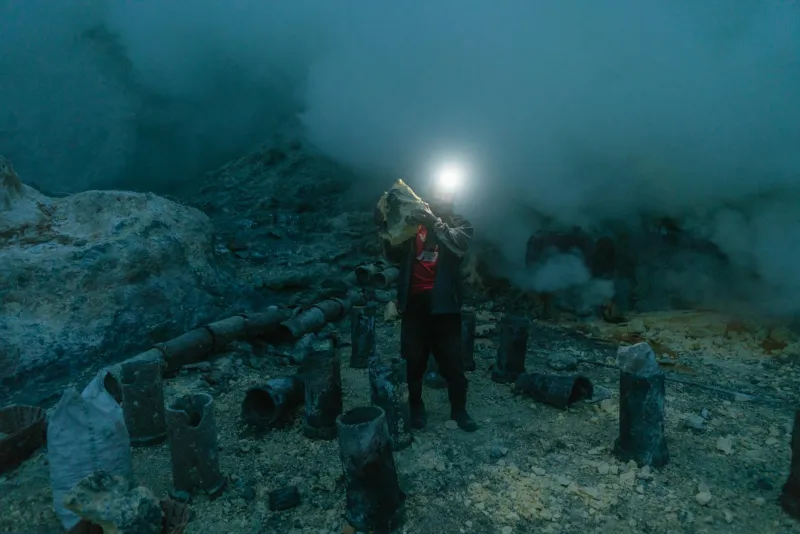
Within weeks, he was working underground, following his father into the mines. The darkness down there was absolute. So was the silence—broken only by the rhythmic scrape of tools and the weight of rock above. For the next seven years, this became his classroom. Not by choice, but by circumstance.
What nobody could have predicted: the mines would teach him something no university could.
The Accidental Education
Working in confined spaces with men whose bodies had been carved by repetitive trauma, this young miner began noticing patterns. Miners who'd survived cave-ins carried their fear in their bodies long after they'd left the mines. They'd jolt awake at night. Their hands would shake at the slightest vibration. They moved through the world as if danger was still pressing down on them—because, neurologically, it still was.
He had no formal framework to understand this. He had no textbooks. No mentors in white coats. He had only observation, curiosity, and the kind of relentless questioning that had gotten him expelled in the first place.
At 24, he saved enough money to enroll in community college. Not Yale. Not MIT. A small school in rural Kentucky where nobody knew his story. He started reading neurology textbooks in the library at night. He worked odd jobs during the day. He taught himself what high school had never given him permission to learn.
The formal education system had written him off. So he wrote his own curriculum.
The Outsider's Advantage
By the time he entered graduate school—a process that took him into his thirties, when most academics were already publishing—he carried something his peers didn't: a complete absence of institutional orthodoxy. He hadn't spent his formative years absorbing the "correct" way to think about the brain. He hadn't been trained to see memory as a filing cabinet or trauma as a discrete medical event.
He'd seen it in real bodies. He'd watched it reshape how human beings moved through the world.
This perspective made him dangerous to conventional thinking.
His early research on how repeated physical trauma embeds itself in the nervous system was met with skepticism. The neuroscience establishment was looking for chemical explanations, molecular pathways, elegant mechanisms that fit into peer-reviewed journals. What he was describing—the way fear lives in the body, how trauma rewires not just the brain but the entire nervous system—seemed too poetic, too observational, too... unscientific.
He published anyway. Small journals first. Then larger ones. Then his work started getting cited. Then replicated. Then it became foundational.
Today, his research on trauma-informed neuroscience influences treatment protocols across the country. Therapists cite his work. Researchers build on it. The very field he entered as a high school dropout—through the back door, without credentials, without pedigree—now treats his insights as essential.
The Maverick Advantage
The irony is sharp: the system that expelled him was designed to standardize thinking. The mines that he was forced into became the place where he learned to think differently. His lack of formal training, which should have been a liability, became his greatest asset.
He never learned to see the brain the way it's supposed to be seen. So he saw it the way it actually works.
There's a lesson buried here about who we decide to educate and who we decide to discard. The institutions that rejected him were following a script—a kid who asks too many questions, who doesn't fit the mold, is a problem to be removed. The mines, brutal and unforgiving, became his real education. Not because they were kind, but because they forced him to pay attention to what his eyes could see and his mind could understand, regardless of what the textbooks said.
At 67, he still teaches. Still researches. Still questions. And the field that once doubted him now credits him with helping redefine how we understand one of the most essential human experiences: how we survive what breaks us, and what happens in the brain when we do.
The coal mines of Kentucky didn't produce what anyone expected. But then again, the greatest discoveries rarely come from where we're looking.