When Wrong Turns Lead to Right Places
American innovation has a dirty little secret: our most world-changing inventions usually happened by accident. While we love stories about brilliant visionaries executing perfect plans, the truth is messier and more inspiring. Some of our most transformative technologies were created by people who were trying to solve completely different problems — or who stumbled into greatness after failing spectacularly at their original goals.
Here are five accidental breakthroughs that prove the best way to change the world might be to aim somewhere else entirely.
1. The Post-It Note: When Weak Glue Became a Billion-Dollar Mistake
The Misfit: Spencer Silver, a 3M chemist who was supposed to create super-strong adhesives
The Happy Accident: In 1968, Silver was working on developing powerful glues when he created something that seemed completely useless — an adhesive so weak it could be peeled off without leaving residue. For five years, he wandered around 3M's offices trying to find someone, anyone, who wanted his "failed" invention.
Enter Art Fry, a fellow 3M employee who sang in his church choir and was frustrated by bookmarks that kept falling out of his hymnal. When Silver demonstrated his removable adhesive, Fry had his lightbulb moment. The first Post-It Notes were born from Silver's professional disappointment and Fry's Sunday morning annoyance.
Today, Post-It Notes generate over $1 billion in annual revenue. Silver's "failure" became one of 3M's most successful products, proving that sometimes the best innovations come from embracing what doesn't work.
2. Microwave Cooking: The Candy Bar That Melted History
The Misfit: Percy Spencer, a self-taught engineer who never finished grammar school
The Happy Accident: In 1945, Spencer was working on radar technology for Raytheon when he noticed something odd — a chocolate bar in his pocket had melted while he stood near a magnetron (a radar component). Most people would have cursed their ruined snack and moved on. Spencer got curious.
He started experimenting, placing popcorn kernels near the magnetron and watching them pop. Then came eggs, which exploded spectacularly. Within months, Spencer had built the first microwave oven — a 750-pound monster that cost $5,000 (about $70,000 today).
The man who revolutionized American cooking never intended to enter the kitchen appliance business. He was just trying to improve radar systems and happened to have a sweet tooth at exactly the right moment.
3. Velcro: The Burr That Stuck Around
The Misfit: George de Mestral, a Swiss engineer who couldn't enjoy a simple walk with his dog
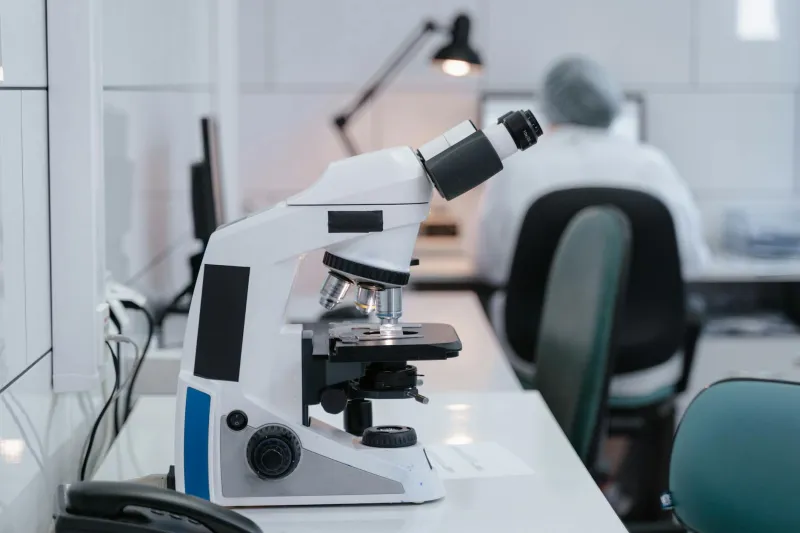
The Happy Accident: In 1941, de Mestral returned from a hunting trip in the Alps annoyed by the burrs stuck to his clothes and his dog's fur. Instead of just picking them off, he examined them under a microscope and discovered their hook-like structure that grabbed onto fabric loops.
It took him eight years to figure out how to replicate nature's design artificially, and another decade to convince manufacturers that his "zipperless zipper" had commercial potential. The name "Velcro" comes from the French words "velours" (velvet) and "crochet" (hook).
NASA eventually adopted Velcro for space missions, but de Mestral's breakthrough began with nothing more than post-hike frustration and scientific curiosity. Today, Velcro generates hundreds of millions in annual sales, all because one man couldn't ignore a sticky problem.
4. Super Glue: The Clear Coating That Wouldn't Stop Sticking
The Misfit: Harry Coover, a Kodak chemist trying to create clear plastic gun sights during World War II
The Happy Accident: In 1942, Coover was experimenting with cyanoacrylates to create precision optics when he discovered a compound that stuck to absolutely everything it touched. It was a disaster for his original project — the substance was impossible to work with and ruined expensive equipment.
Coover filed the formula away as a failed experiment. Six years later, while working on heat-resistant aircraft canopies, he rediscovered the same compound. This time, instead of seeing it as a problem, he recognized its potential. The "failed" gun sight material became Super Glue.
The product that now fixes everything from broken dishes to medical emergencies started as a military optics project gone wrong. Coover's willingness to revisit his "failures" turned a wartime disappointment into a household necessity.
5. Pacemakers: The Rhythm Section Nobody Ordered
The Misfit: Wilson Greatbatch, an electrical engineer building a heart rhythm recording device
The Happy Accident: In 1956, Greatbatch was assembling a circuit to record heart sounds when he grabbed the wrong resistor from his parts box. The circuit began producing electrical pulses that mimicked a human heartbeat perfectly — exactly what he wasn't trying to create.
Most engineers would have cursed the mistake, fixed the circuit, and moved on. Greatbatch recognized that he'd accidentally solved a completely different problem. He spent the next two years miniaturizing his accidental heartbeat generator and developing the first implantable pacemaker.
His "wrong" resistor has since saved millions of lives. Greatbatch's mistake became one of medical history's most important devices, proving that sometimes the best discoveries happen when we're not looking for them.
The Accident Advantage
What connects these five breakthroughs isn't genius or careful planning — it's the willingness to see opportunity in unexpected places. Each inventor could have dismissed their "failed" experiments or "useless" discoveries. Instead, they recognized that innovation often wears the disguise of disappointment.
Their stories remind us that American ingenuity isn't just about having brilliant ideas. It's about staying curious when things go wrong, asking "what if" when others ask "why me," and understanding that sometimes the best way to change the world is to fail at something else first.
In a culture obsessed with success stories and five-year plans, these accidental innovators prove that the most transformative breakthroughs often come from embracing the unexpected. They turned professional disappointments into billion-dollar industries, proving that in America, even our failures can change the world.
Sometimes the most revolutionary thing you can do is make the wrong thing at exactly the right time.